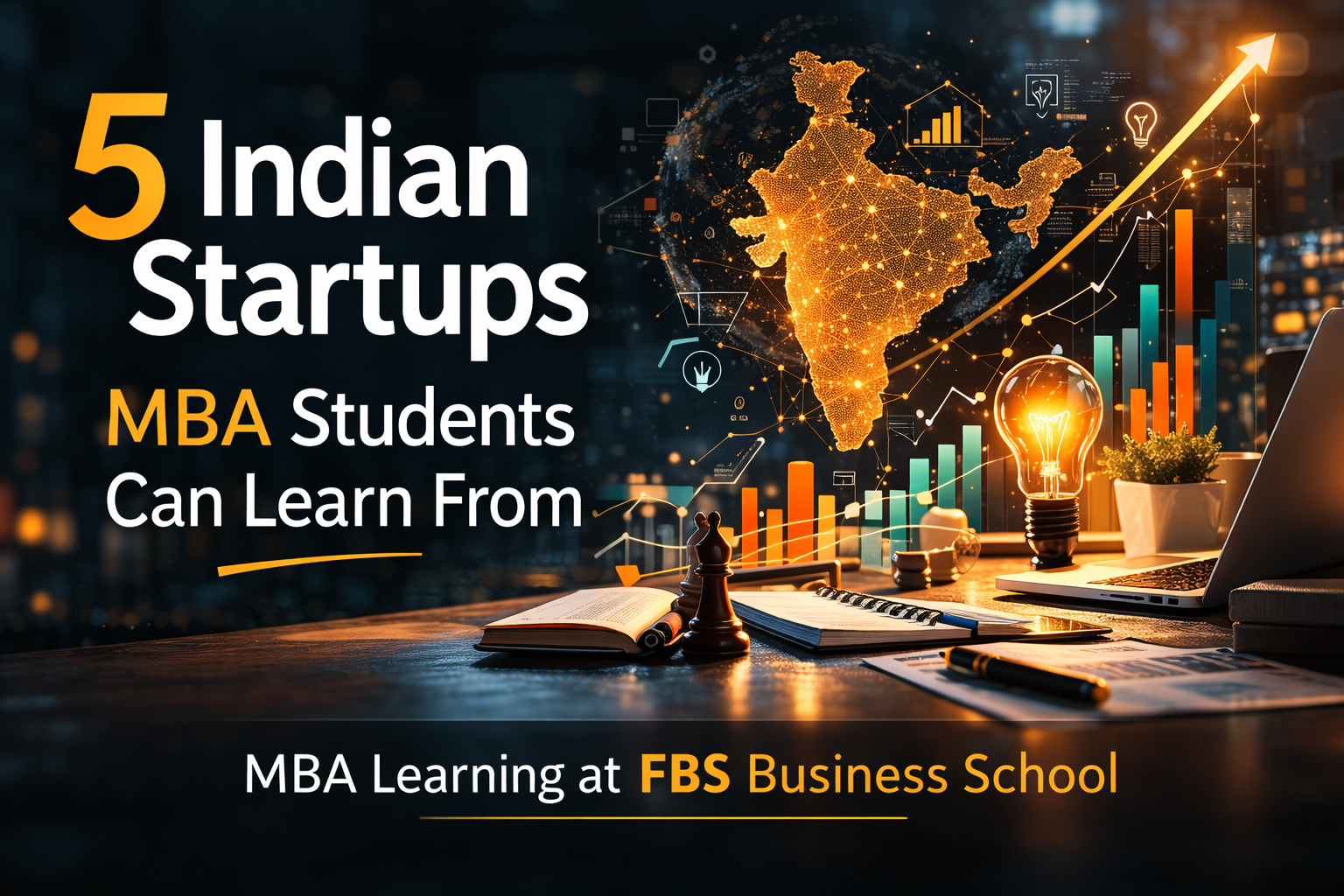
The Indian start-up ecosystem has emerged as a case study globally in terms of entrepreneurship, and innovation. In the last ten years, some Indian start-ups have changed the traditional industries with innovative business models, leadership, and market strategies.
For MBA students, the success stories of the start-ups are not just news headlines but learning experiences that emphasize scalability, venture growth, funding, and the importance of a customer-centric approach.
Lets explore what some of India’s most famous companies teach future business leaders.
Zomato – Reinventing the Business Model
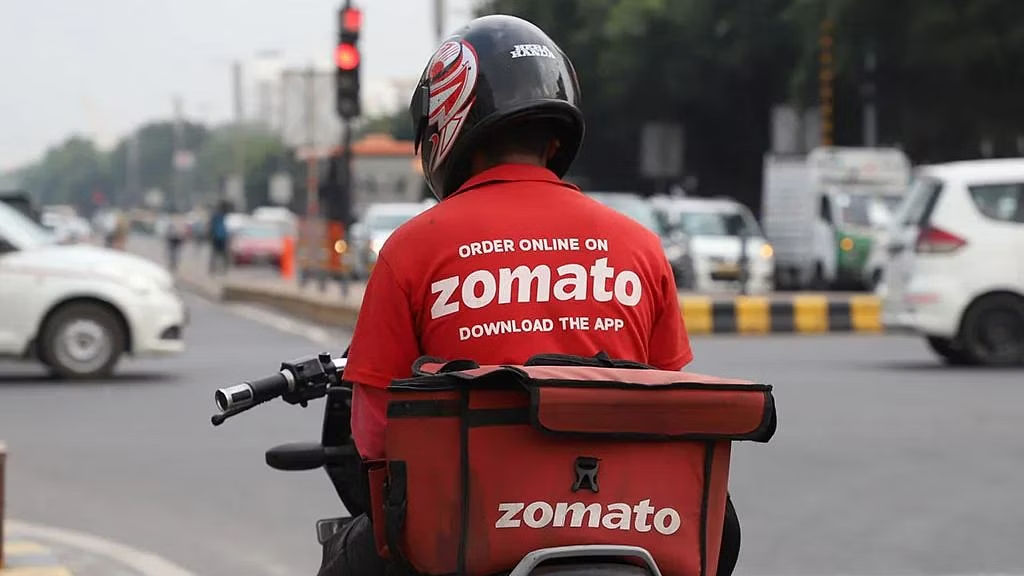

Zomato began as a restaurant search service where people could view menus and reviews of restaurants online. At that point, food delivery was not a key consideration for Zomato.
But with the adoption of technology and changing consumer behaviour, convenience became the new need.
Zomato realized the market signals early and shifted to food delivery, which was a massive shift in their business model.
It needed restructuring, a logistic system, and significant investment.
This was not a small change but a complete turnaround of its business model, which led to huge venture growth.
Lesson learned:
Markets change very quickly. The companies that fail to keep up with the times may become irrelevant. Zomato illustrates how innovation, data-driven thinking, and adaptability can change the rules of the game when it comes to growth.
This case study is important for students enrolled in top MBA colleges because it emphasizes the need to be flexible in the face of market change.
Flipkart – Customer-Centric Innovation


Flipkart has been a game-changer in the Indian e-commerce sector, thanks to its deep understanding of its customers.
When customers were hesitant to pay for products online, Flipkart introduced the Cash on Delivery system, which is a customer-centric approach that has helped the company gain the trust of its customers and adopt technology at a faster rate.
The company has made significant investments in logistics, storage, and large-scale sales.
Lesson learned:
Consumer psychology is the key to a successful market strategy. Flipkart is an example of how innovation from around the world, when modified according to local conditions, can help start-ups succeed.
It is a learning experience in innovation and trust-building that can be applied to MBA students studying marketing and entrepreneurship as a specialization.
Nykaa – The Power of Focused Positioning


Nykaa adopted a specialization strategy instead of diversification, and by concentrating on the beauty and personal care segment, it was able to create brand leadership and premium positioning.
Nykaa’s omnichannel business is a great example of innovative and scalable market execution.
Lesson learned:
Nykaa stresses the importance of effective leadership, branding, and venture growth, which is a crucial aspect for MBA students to understand the success factors of sustainable businesses.
Meesho – Scalability Through Social Commerce

Meesho brought a different business model to the table by allowing common people, especially small vendors and homemakers, to resell products through social media sites.
It did not invest much in traditional marketing but rather decided to empower micro-entrepreneurs.
This customer-focused strategy enabled the company to reduce costs associated with acquiring new customers.
With proper funding and investment rounds, Meesho quickly grew in smaller and developing cities, apart from large metro cities.
Lesson learned:
Meesho proves that the key to massive venture growth is the understanding of underserved markets and the development of supportive entrepreneurship ecosystems.
For MBA students, this is a great example of disruptive market strategy.
Paytm – Driving India’s Digital Payment Revolution

Paytm was an important catalyst in the digital payments revolution in India.
What started as a mobile recharge service has now grown into a full-fledged fintech platform providing wallet services, UPI payments, banking, insurance, and investment services
The Indian government’s demonetization policy in 2016 accelerated Paytm’s growth and helped it take the lead in the digital technology revolution sweeping across India.
With massive funding and investment from international investors, Paytm has emerged as one of the most successful start-ups in India and a shining example of fintech innovation.
Lesson learned:
Paytm is an example of how the right timing, government policies, and market conditions can influence the growth of a business.
It also makes clear to MBA students that entrepreneurship is not only about innovation but also about strategic management and financial discipline.
These learnings are covered in the best MBA courses on fintech and digital transformation.
Why Indian Start-ups Provide Excellent Learning Experiences for MBA Students
Indian start-ups provide hands-on learning experiences in the following ways:
- Entrepreneurship and innovation
- Implementation of market strategies
- Management of funding and investments
- Adoption of technology on a massive scale
Students looking for management education in the top MBA colleges, learning from the success stories of Indian start-ups helps fill the gap between theory and practice.
The best MBA courses are being designed to incorporate real-life learning experiences such as these to prepare students for the rapidly changing business world.
MBA Learning at FBS Business School
At FBS Business School, the scope of management studies extends beyond the boundaries of textbooks. FBS links its management studies directly to the start-ups and innovation markets of India.
It aims to provide the best MBA courses to its students. The college prepares its MBA students to enhance their strategic thinking skills, leadership skills, and business acumen. FBS provides its MBA students an insight into the business models and market strategies to make them leaders in the current competitive market.