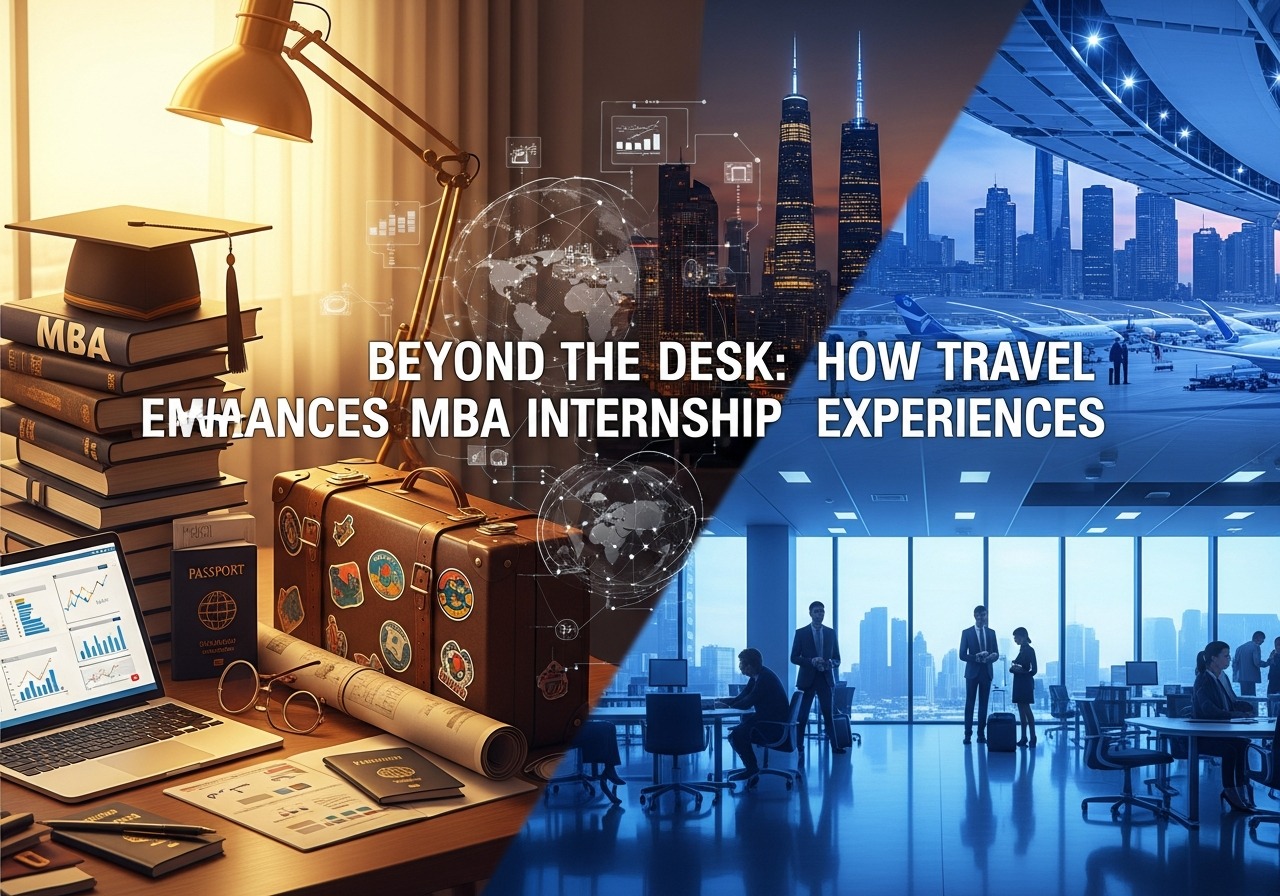
The internship is an integral part of the MBA experience, enabling students to use their learning in solving business problems. However, many students miss out on the opportunity of traveling during their internship.
While on an internship, traveling is a great way to bring business theory to life. A student interning in a large city can observe how big organizations operate, make decisions quickly, and coordinate across departments. In contrast, interning in a smaller city or emerging economy shows how organizations innovate with limited resources. Adapting to these environments helps students develop awareness, flexibility, and other essential qualities for a business manager.
The interpersonal benefits of traveling cannot be overstated. The new environment provides interns the opportunity to interact directly with individuals from different backgrounds. This allows students to observe and learn how individuals from diverse backgrounds communicate, work, and even conduct themselves. This gives students the chance to develop emotional intelligence, which is hard to build in a virtual internship or classroom.
Travel also provides cognitive benefits. The constant challenges of navigating a new city, understanding a new market, or even handling simple logistics can help sharpen one’s cognitive skills.
These skills are beneficial in the workplace as well, where one is often required to make decisions in a situation of incomplete information.
MBA interns who are required to travel can also benefit from some practical advantages:
- Making new connections to expand their professional networks with local professionals, alumni, or business leaders.
- Observing consumer behavior and business operations, which may be region-specific.
- Understanding business regulations in the country.
- Improving their negotiating skills through interaction with different kinds of professionals.
All these add value to the internship experience, not only for resume-building but also in developing a thoughtful, world-wise attitude. Traveling reveals gaps in the conventional MBA learning environment, prompting students to think critically and develop unexpected skills.
Developing Versatile Leadership Skills Through Travel
Traveling can also provide opportunities for personal growth. Interacting with different kinds of professional environments and business cultures may make the intern reflect on his or her own work style, skills, and limitations. Traveling may also help interns gain more confidence and independence as they learn to deal with situations on their own.
In order to benefit from their experience of traveling, the interns must do it in a meaningful way. By understanding business culture, managing logistics, and staying open to learning, interns can use travel as a true learning tool rather than just a change of scenery.
By doing so, interns can gain far more than what is assigned in their work.
The inclusion of travel within the MBA internship experience also reflects a larger trend in management education emphasizing hands-on learning. Rather than purely focusing on business functions, traveling provides exposure to different markets and diverse teams. This exposure is important for learning how to be a leader.
Traveling during an internship exposes students to diverse business environments and builds confidence to face new challenges. For MBA students, this experience is much more than completing projects or assignments; it is about learning to be a versatile manager. Traveling during an internship is not just a plus; it is a necessity for becoming a well-rounded professional.
FBS Business School: Experiential Learning Through Internships
In business schools like FBS Business School, there has been an increased focus on experiential learning as a part of the MBA program. In this context, internships have been created that not only provide students with an opportunity to learn but also engage with different markets. This provides a platform for students to learn as much as they can, with travel being a part of their learning process rather than an obligation. This, in turn, allows them to become more adaptable, learn as much as they can, and have a broader perspective on business as a whole.