
MANAGEMENT
IPMAT
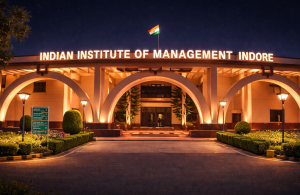
IPMAT is considered a perfect management entrance exam for students who have finished Class 12 and want to build up an early career in business, management, or leadership through the prestigious Indian Institutes of Management (IIMs). Direct entry into a five-year Integrated Program in Management (IPM), combining undergraduate and MBA studies, is provided by IPMAT, unlike post-graduation exams like CAT, XAT, or CMAT. This enables earlier, direct admission to IIMs immediately after Class 12, offering a combined, accelerated career path. JIPMAT is a similar entrance exam directed by NTA for admission into IIM Jammu and IIM Bodh Gaya. Students from streams such as MPC, MEC, BIPC, CEC, HEC, HEP, HES, and HPS can apply, generally up to 19–20 years of age, and even non-math students can prosper with the good preparation. The exam is conducted in online mode, concentrating on Quantitative Ability, Verbal Ability, and Logical/Analytical Reasoning, followed by a Personal Interview.
IPMAT is usually held in May, with applications opening between February and April. Selected students will get a Bachelor’s degree after three years and an MBA after five years, with placements comparable to top MBA programs. IPMAT offers a high-ROI, student-friendly pathway to management, highlighting flexible online/offline coaching, early mentorship, and internships. With reduced exam stress and strong peer networks, it provides a secure, accelerated route to a successful career.
At FBS, students are prepared for IPMAT along with MEC studies that help them develop not just academic knowledge but also valuable skills necessary for success in the corporate world, including critical analysis, reasoning, problem-solving, and proficient communication. We provide our students with the chance to practice taking tests, conduct skills assessments, and develop learning skills using the various methods we have in our curriculum. So they can gain the confidence necessary for the competitive entrance process. Our methodology also uses practical methods to develop their "personality" so they can develop the knowledge, credibility, and confidence they will need to succeed in top-tier graduate management programs and will ultimately help them succeed in their careers.
JIPMAT
JIPMAT is conducted by NTA and is the ideal management entrance exam for Class 12 students who want to pursue 5-year Integrated Program in Management (IPM) courses at IIM Jammu and IIM Bodh Gaya. The JIPMAT entrance exam is quite different from CAT and XAT, as it provides students with an opportunity to get into IIMs right after Class 12 and provides students with the opportunity to pursue BBA+MBA integrated courses. Students from MPC, MEC, Commerce, and Humanities streams (age limit 19-20 years) can apply—a math background is helpful but not mandatory with good preparation. Quantitative Ability, Data Interpretation, Logical Reasoning, and Verbal Ability are examined through 120 MCQs over 180 minutes (in online mode), and this is followed by a Personal Interview. It is conducted in June every year, and applications are available from April to May.
Graduates earn dual degrees (BA/BSc + MBA) with excellent placements matching regular MBA batches. JIPMAT provides a high-ROI pathway with flexible coaching, early internships, and strong IIM brand value.
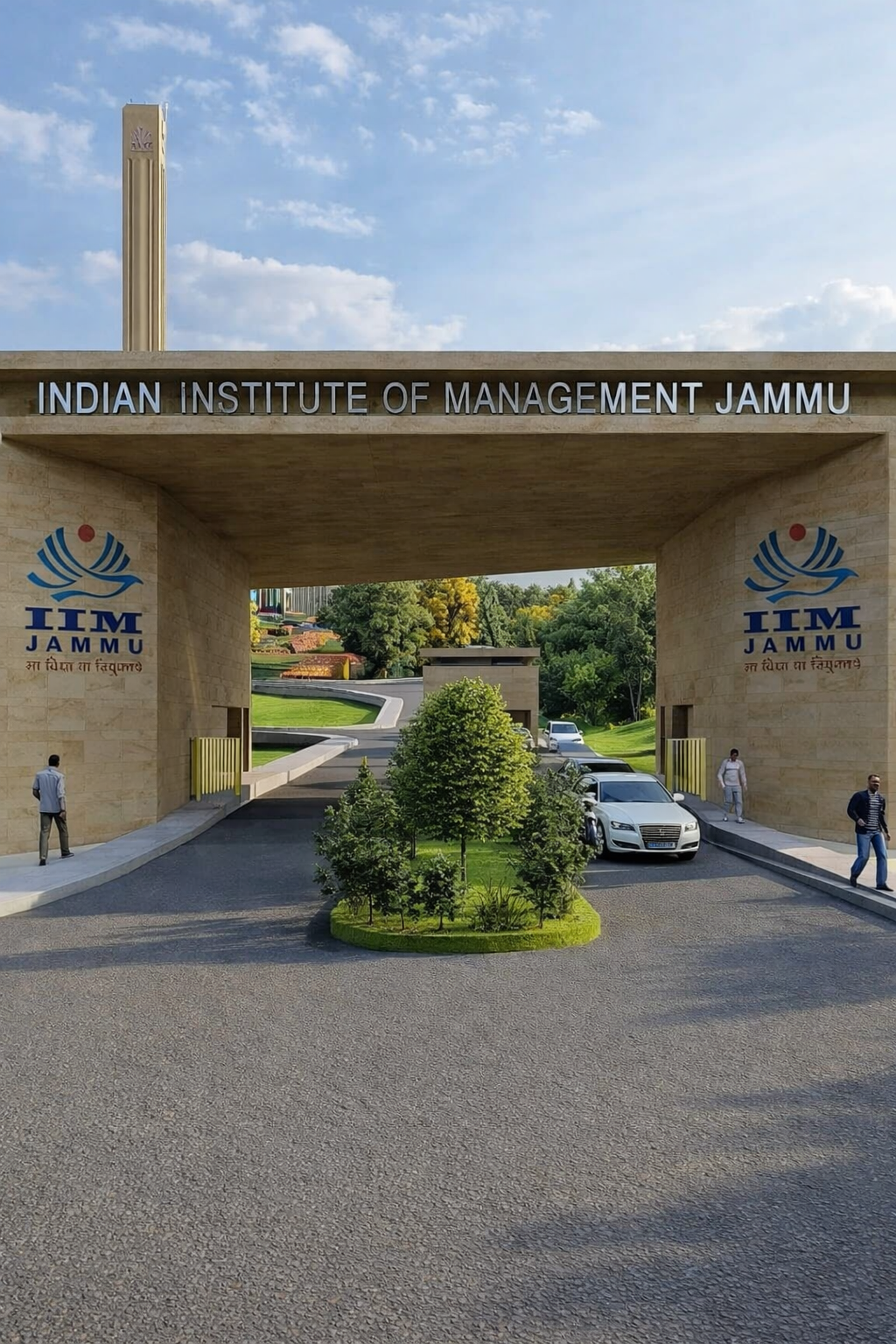
At FBS Business School, students prepare for JIPMAT alongside MEC studies, developing quantitative aptitude, logical reasoning, data interpretation, and verbal skills essential for success. We provide practical learning that helps in developing analytical skills, confidence in communication, and problem-solving skills required in competitive entrance and corporate environments.
IIMB

IIM Bangalore offers two prestigious 4-year B.Sc. (Hons) programs: B.Sc. Economics (with Data Science/Business minors) and B.Sc. Data Science (with Economics/Business minors)—perfect for Class 12 commerce students (MEC) seeking elite undergraduate education. Conducted once annually through the IIMB Entrance Test (120-min CBT, 60 MCQs: English 15Q, Quant/DI 30Q, Logical Reasoning 15Q) + Personal Interview. Math in Class 12 is mandatory, 60%+ in Class 10 Math, age ≤ 20 years. These residential programs offer a mix of academics, research, and industry exposure under the new policy of NEP 2020. Intake: 40 seats each (scales to 640 total). Fees are ~₹8.5 lakh/year with need-based scholarships.
At FBS Business School, MEC + IIMB Entrance preparation builds quantitative aptitude, data interpretation, logical reasoning, and English skills for the CBT through sectional practice and Personal Interview training. Our structured coaching helps commerce students secure IIM Bangalore UG seats.
CUET
The National Testing Agency (NTA) has set up a National Examination known as the Common University Entrance Test (CUET). This will provide prospective students with a simplified application and admission process by allowing them to apply for admission to multiple universities at the same time through a single CUET. The CUET is administered annually and is conducted in a computer-based format, consisting of Language, Domain-specific, and General Knowledge and Aptitude tests (Logical Reasoning, general knowledge, and Quantitative Aptitude). Students who have completed or are currently completing Class 12 are eligible to take the exam, and the scores required depend on the course and university.
For commerce students, taking MEC and CUET together can create a strong pathway to enter programs such as BBA, BCom, and Economics at prominent universities such as the University of Delhi, Jawaharlal Nehru University, the University of Hyderabad, and more. At FBS Business School, we help students who are preparing for MEC and CUET to have a structured plan with the use of practice tests and a concept-based approach to learning. Additionally, we help students develop analytical thinking ability, communication skills, and problem-solving ability so that they are successful in gaining entry into the best universities.
LAW
CLAT
The Common Law Admission Test (CLAT) is a national-level entrance test after Class 12 for students who want to build a career in law, the judiciary, corporate law, legal services, or public policy. CLAT after 12th allows students to begin their law education early through 5-year Integrated Law Programs offered by the top 26 National Law Universities (NLUs) in India. Students from any streams, such as MPC, BiPC, CEC, MEC, HEC, and HEP, are eligible to appear for the CLAT exam. There is no requirement to have prior knowledge of law. Candidates must have passed or be appearing for their Class 12 examination with the required minimum percentage as prescribed by the exam authority. CLAT is a pen-and-paper-based, objective-type exam conducted for a duration of 2 hours. The question paper focuses on testing a student’s reading comprehension, logical thinking, and real-world awareness rather than learning from repetition.

Through CLAT, students can get admission into 5-year integrated law programs such as BA LLB, BBA LLB, B.Com LLB, and B.Sc LLB. These programs are offered to students by 26 National Law Universities (NLUs) in India. Undergraduate education is united with professional legal training in these programs, which prepare students for great employment opportunities in law, commercial enterprises, timber policy, and public service. India’s top law universities are accessible via CLAT, a pathway that offers quality legal education, strong academic exposure, and excellent career prospects.
It is the most preferred pathway for students who are serious about building a long-term career in law, litigation, corporate practice, the judiciary, or legal consultancy.
FBS Business School provides students with preparation for both the MEC and the Common Law Admission Test (CLAT) through a comprehensive, structured learning system. FBS's programs teach students the skills necessary to take the CLAT Exam, including legal reasoning, logical reasoning, reading comprehension, and an understanding of current events. In addition to preparing students for the CLAT, FBS emphasizes the development of analytical thinking, communication, and critical reasoning skills, thereby enabling students to possess both the skills and confidence necessary for admission to prestigious law schools and success as lawyers.
AILET

The AILET is an entrance test conducted for the law courses provided by the National Law University, Delhi. The law courses provided by the National Law University, Delhi, include BA LL.B. (Hons.), LL.M., and Ph.D. AILET is regarded as the one of the most competitive law entrance tests in India. AILET is conducted every year as a computer-based test. AILET tests the candidates on various subjects, including English, logical ability, general knowledge & current affairs, and analytical ability. These subjects are considered the most important subjects for any law student. Admission to the prestigious National Law University, Delhi, is based on the AILET entrance test and the admission procedure.
AILET preparation is considered an important milestone for the students who wish to develop their career as lucrative and successful legal professionals in the field of law, including corporate law, judiciary, and research.
At FBS Business School, students are provided with proper guidance and preparation for the AILET entrance test. This is a highly competitive test for admission to law schools in India. Students are provided with proper preparation and guidance for a successful and lucrative career in the legal profession from FBS.
LSAT
The LSAT (referred to as the Law School Admission Test) is a standardized entrance exam that offers students admission into many law schools across several different countries, including both Canada and the United States, as well as some international university systems. The test is owned and controlled by the Law School Admission Council (LSAC), an organization formed in the United States in 1947 to provide uniform standards for assessing candidates' key competencies needed to complete a law school program successfully. The LSAT is a standardized assessment directed by the Law School Admission Council (LSAC). The purpose of the test is to measure the essential skills necessary for success in a legal education. The primary skills evaluated by the LSAT are a student’s ability to read, conduct analytical reasoning, and apply logical reasoning, all of which are required to comprehend arguments and solve intricate problems in law.

The LSAT is offered several times throughout the year, most often in a computer-based format, at LSAC-approved test centers and can be taken in over 100 different countries. The LSAT is one of the biggest factors in the process of being admitted into most law-related programs, i.e., law schools, and you will usually have a score of between 120 and 180, and a higher score will improve your chances of gaining admission into a top law school. In addition to supporting students with their academic work, FBS Business School provides structured and individualized guidance to help students prepare for the LSAT test. By preparing for the LSAT, students strengthen their analytical reasoning, communication, and legal reasoning skills in order to assist them in developing a successful career in law, legal research, corporate law, and public policy.
SLAT

The Symbiosis Law Admission Test, also known as SLAT, is an entrance examination conducted by Symbiosis International (Deemed University). Candidates who wish to join Law programmes offered by the Symbiosis International (Deemed University) must take this common, mandatory Computer-Based Test (CBT). Candidates first need to register for the SLAT and also register separately for the Institute of Symbiosis International (Deemed University) where they want to study. This test is conducted annually in December. This test consists of five different sections, such as Logical Reasoning, Legal Reasoning, Analytical Reasoning, Reading Comprehension, and General Knowledge. Each section consists of 12 questions, and each correct answer carries +1 mark. Based on the entrance test score, candidates will be shortlisted for Personal Interaction. Further, the admission process is conducted separately by the respective institutions.
At FBS Business School, students studying MEC receive training in analytical skills, language skills, and reasoning, helping them prepare for admission into their dream institution. FBS Business School follows a structured schedule from the beginning, helping students set clear goals and pursue them progressively.
DESIGN
NID DAT

The NID Design Aptitude Test (DAT) is the national-level entrance test held by the National Institute of Design (NID) to test candidates creativity, observational skills, visual thinking, logic, and general awareness for BDes and MDes courses at all NID campuses based on the aptitude rather than the academic performance of candidates. It is a two-stage entrance test: DAT Prelims comprises a General Ability Test and a Creative Ability Test, which are primarily used to select candidates, whereas DAT Mains comprises a studio test, observation, memory drawing, and a personal interview to determine the merit score. For eligibility, the candidate should be a pass holder or appearing in Class 12 from any board across India in any stream without requiring any minimum percentage, with an upper age limit of 20 years for BDes (5 years relaxation for SC/ST/PwD) and no upper age limit for MDes. The DAT test suits MEC aspirants, as mathematics can be helpful for the logical section, whereas consistent sketching and design-making can help candidates crack the DAT prelims and mains and secure admissions to top NID colleges.
At FBS Business School, MEC + NID preparation equips commerce students with quantitative aptitude, logical reasoning, and observation skills for DAT Prelims for securing top NID seats.
UCEED
Getting into product design, visual communication, or industrial design right after high school? UCEED opens doors. Run by IIT Bombay for the UCEED committee, it leads straight to B.Des programs across top design colleges in India. Instead of waiting for graduate studies like CEED or NID DAT, this one fits learners stepping out of Class 12. It blends logic, creativity, and clear thinking - no need for advanced degrees upfront. Taken online, the test checks how well you observe, reason, and grasp visuals, along with verbal and number skills. Some schools add hands-on design tasks later during selection rounds. You can take it if you’re finishing twelfth grade from any recognized board - science, commerce, arts, it doesn’t matter. Age usually sits between 19-20. Backgrounds like MPC, MEC, BIPC, even non-art streams work fine. What counts? Sharp eyes, solid sketching practice, and solving problems in fresh ways. Not every artist starts young - but starting now helps. Every year, around October through November, applications become available. The test itself takes place in January.

Those who do well gain entry into a four-year B.Des course at leading institutions. After graduation, many land roles at product design studios, technology firms, consumer goods brands, or independent design houses. For students finishing Class 12, UCEED acts like a clear route into the design world. Guidance begins early. Preparation follows a steady format. Learners grow alongside others with similar goals. This mix supports a shift into a career that blends imagination with routineUCEED graduates lead in UI/UX design agencies, gaming studios, automotive design, consumer electronics, and digital product companies with average packages of 10-18 LPA. Studio-based learning, industry collaborations, and global design exposure create India's top design professionals.
At FBS Business School, MEC + UCEED preparation equips commerce students with visualization, spatial ability, logical reasoning, and observation skills. Securing top UCEED seats at IITs and leading design schools.
FASHION
NIFT

The NIFT Entrance Exam, which stands for National Institute of Fashion Technology Entrance Examination, is organized by the National Institute of Fashion Technology (NIFT). It is used to select candidates for admission in various design and fashion technology courses (B.Des, B.F.Tech, M.Des, M.F.Tech, and M.F.M) offered at all NIFT centers across India. There are two stages involved in the examination: In the first stage, there is a written test comprising a GAT paper involving multiple choice questions in communication, quantitative aptitude, reasoning ability, and general knowledge, followed by a CAT, which focuses on testing drawing, observational, visualization, and designing skills. The second stage involves Situation Test / Group Discussion & Personal Interview, wherein abilities in handling materials, innovation in solving problems, and communication are evaluated. The candidate should pass or appear in Class 12 or equivalent from any stream and meet the minimum percentage requirement in Class 12. The minimum age requirement is 17 years, whereas the maximum age limit for B.Des is 23 years (with a 5-year relaxation in SC/ST/PwD category), and there is no upper age limit for M.Des.
This pattern suits the MEC students perfectly since good mathematical and logical abilities will help them score well in the GAT, whereas regular sketching and designing practices will develop their creativity required to succeed in the CAT, Situation Test, and GD-PIWith 19 campuses in India, the programs offered are in the field of 4-year undergraduate and 2-year postgraduate programs in the areas of creativity, technology, and business acumen. The best career prospects await NIFT graduates in prominent design firms, export houses, retail brands, and startups, with a proven track record in placement with average salaries in the range of 6-12 LPA. The programs provide students with lots of hands-on learning through industry projects, internships, and global exposure, which helps students turn their creative passion into successful careers in the fashion industry.
At FBS Business School, they are preparing students to appear for the NIFT Entrance Exam while simultaneously laying a foundation through the study of MEC subjects. Commerce students who study MEC at FBS are equipped with quantitative aptitude, logical reasoning, English comprehension, and general awareness skills. This combination of MEC and NIFT at FBS equips students with analytical skills required to appear for GAT, as well as creative skills required to appear for NIFT, thus opening doors to top university admissions.
ACTURIAL SCIENCE
ACET
The Actuarial Common Entrance Test (ACET) is an entrance exam executed by the Institute of Actuaries of India (IAI). Students who want to specialize their career in actuarial science can take the ACET exam. ACET is the first step for those who want to become actuaries. In the ACET exam, students are tested for their knowledge in mathematics, statistics, data interpretation, and logical reasoning. Students who have completed or are appearing for their Class 12 and are good at math can apply for the ACET exam. The ACET exam is held several times in a year, and students need to score the required marks to become student members of the Institute of Actuaries of India and further continue their studies. A career in actuarial science requires the analysis of financial risks, prediction of future uncertainties, and assistance to companies in the insurance, finance, and investment businesses.

In FBS Business School, students are provided with proper guidance for the ACET exam along with their regular studies. In FBS Business School, the ACET course helps students improve their mathematical abilities and analytical and problem-solving skills, enabling them to establish a strong foundation for successful professional careers in actuarial science and risk management.
IFoA

The Institute and Faculty of Actuaries (IFoA) is a well-recognized professional body for actuaries around the globe. The IFoA is based in the United Kingdom. The IFoA provides globally recognized qualifications in the area of actuarial science. Actuarial science is the application of mathematics, statistics, and financial theory to analyze risks in various sectors such as insurance, pensions, investments, and finance. To enroll in the Institute and Faculty of Actuaries, candidates must have 10+2 with Mathematics and strong analytical skills. Graduates/professionals can also apply, with no age limit and required English proficiency. The IFoA qualification process includes various exams that cover topics such as probability, financial mathematics, business economics, actuarial modeling, and risk management. The IFoA is recognized for having one of the most comprehensive courses for aspiring actuaries. The IFoA conducts the exams several times a year in computer-based mode. The IFoA provides an opportunity for students around the globe to take up the IFoA qualification. Becoming a qualified actuary with the IFoA provides opportunities in the fields of life insurance, general insurance, consulting, investment banking, and risk analysis.
At FBS Business School, students are assisted and guided in preparations for the IFoA exams through a learning approach. The program helps students develop solid analytical, mathematical, and problem-solving skills necessary for a successful career in actuarial science. With the help of expert lecturers, students are well-prepared for a successful and fulfilling career.
SOA
The Society of Actuaries (SOA) is an international professional organization for actuaries. The majority of the members are based in the United States. The SOA offers prestigious qualifications in the field of actuarial science. The SOA specializes in various fields such as life insurance, health insurance, retirement benefits, finance, and risk management. To enroll in the Society of Actuaries, candidates need a strong mathematics background (10+2 or equivalent). No age limit. This is open to students and professionals with analytical skills and English proficiency. The qualification process of the SOA is through a series of challenging examinations in areas such as probability, financial mathematics, actuarial modeling, statistics, and predictive analytics. These examinations are computer-based throughout the year in various international centers. The SOA is also known for its focus on data analysis and modern actuarial practices, which makes it highly relevant in today’s data-driven financial world. Gaining certification from the SOA can provide aspirants with global career prospects in insurance companies, consulting organizations, financial organizations, and MNCs