Showing up everywhere, artificial intelligence stopped being only movie magic long ago. Real life uses it today, driving business transformation in how companies work worldwide. Whether tiny new firms or massive enterprises, they rely on AI adoption to reshape choices, support customers, handle promotions, build products, manage teams too. What once seemed imaginary now runs quietly inside daily business tasks.
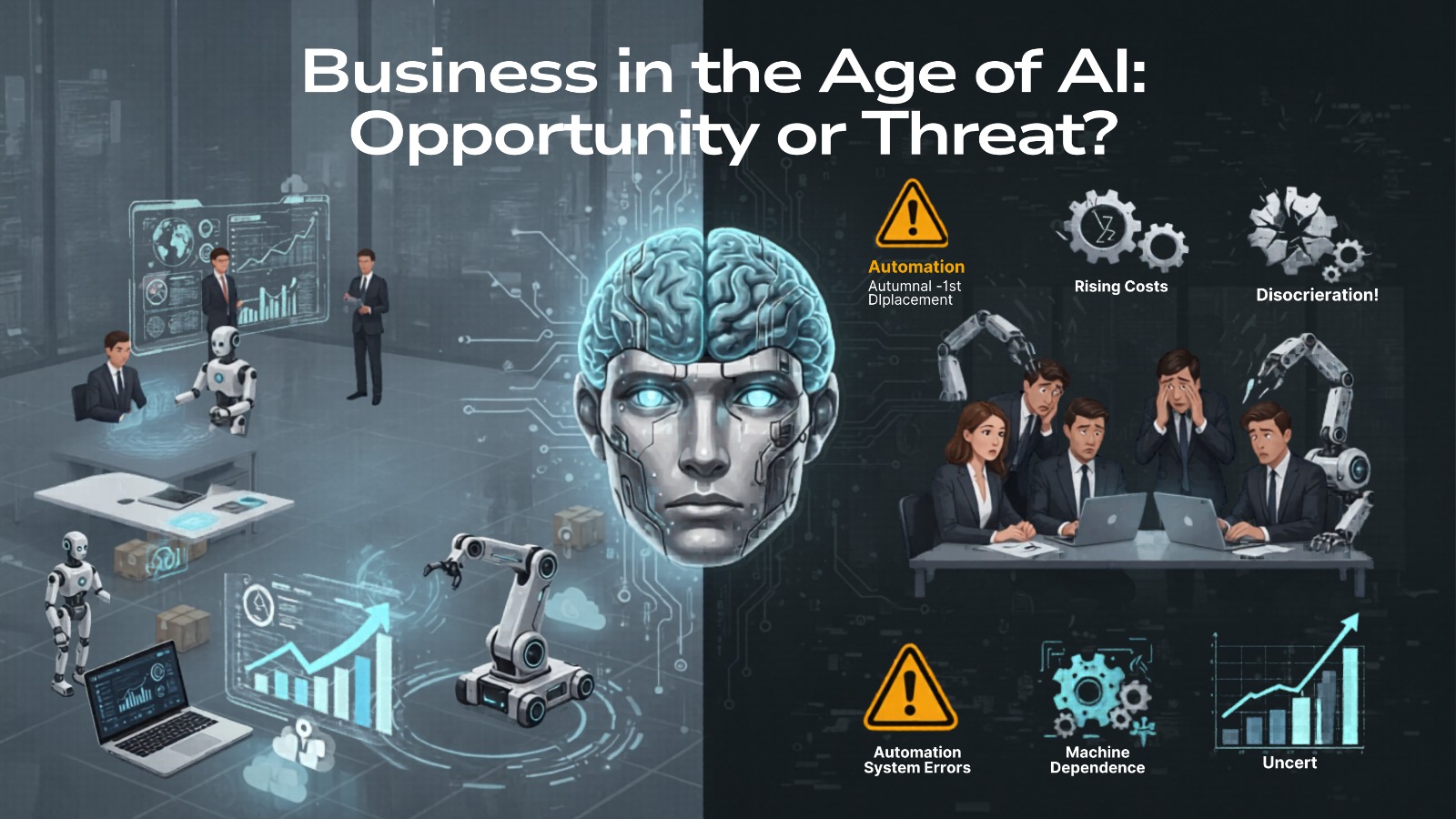
Here we are, facing constant changes – could artificial intelligence lift companies higher, or might it quietly erase roles and routines long set in place? Truth bends either way; outcomes twist based on decisions made behind office doors.
How AI Changes What Businesses Can Do
Using clever tools and fresh ideas helps businesses build a competitive advantage and stay ahead.
1. Efficiency and Productivity
Imagine handling endless forms without lifting a finger – automation systems now do that. Customers get answers to their questions instantly. These systems track stock automatically, so people don’t have to. With routine jobs done by AI, workers dive into ideas only humans can shape.
Take Amazon, for example. Its warehouses run on smart machines that handle sorting and packing tasks. These systems make work faster while cutting down mistakes people might make. Outside warehouse walls, automated helpers pop up on websites too. They reply to visitor questions any hour of day or night. Staff do not need to sit at screens endlessly because these tools take over when humans are off duty.
2. Smarter Decision Making
Artificial intelligence goes through massive datasets in seconds which occupy humans for days, sometimes weeks. Companies make smarter choices because of this speed. For example, predictive analytics allows companies to spot future sales shifts, patterns in how customers act, or what markets will want next.
Like, Netflix analyses through AI what people watch, then suggests what to play next. With this pattern of tracking, Netflix decides which content to produce next.
3. Cost Reduction
AI might cost a bit at first. But after months or years, it often cuts expenses. Machines take over repetitive work instead of people doing it by hand. Mistakes happen less when systems run on their own. Work moves faster without constant oversight. With smart software, spotting shady transactions becomes easier.
How AI Puts Businesses at Risk
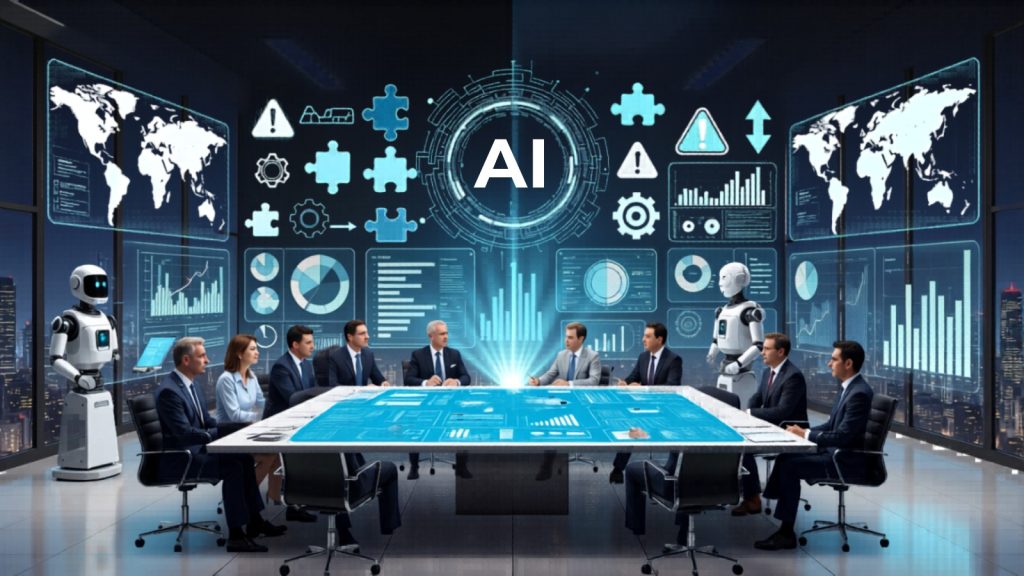
AI brings many advantages, but it also introduces challenges that businesses must consider.
1. Job Displacement
People are mostly afraid about losing their jobs because of AI. Machines might take over tasks that humans now handle every day, like entering information into systems or building products piece by piece. When automation takes over, people who stay in the same roles may find themselves without work. Stuck in old ways might lead nowhere. But picking up something fresh opens doors instead.
Job loss occurs, yet new ways shape the future of work and bring new opportunities, like programming a coding bot, sorting data floods, teaching machines, and designing online adverts. Employers are required to learn and adapt to new ways to be effective in new fields.
2. High Implementation Costs
Spending on artificial intelligence adds up fast. Companies need money for tools, setup costs, one thing after another – plus teaching staff how to use them. Smaller shops often hit a wall trying to keep pace. Big firms pull ahead while others lag behind, slowly but surely.
3. Dependence on Technology
A single mistake by a machine might quietly undo years of careful thinking. When errors happen in health or money matters, the results can worsen very quickly. Relying too much on automated machines and choices risks dulling our own ability to make decisions. A glitch today could mean real harm tomorrow.
Conclusion
Faster machines now shape how companies operate, opening doors while demanding attention. Because they streamline tasks, guide choices, and refine service, yet quietly threaten roles, and drain budgets. Machines learn fast – people adapt slower. Still, movement continues steadily.
FBS Business School: Building Smart Leaders for a Smart Business Era
FBS Business School, recognized as a top management B school and the best MBA college, and a leading business school in Andhra Pradesh, understands that technology is changing every business decision. As a technology-driven business school, FBS seeks to prepare leaders of the future by providing students with knowledge in business combined with a good grasp of new technology, including artificial intelligence.
Through its industry-oriented MBA program, students learn through exposure and are able to think critically and make responsible decisions in a technologically advancing business environment. No longer do students in FBS Business School dread technology, including artificial intelligence, but instead, they learn to work alongside technology, a crucial aspect in a modern-day data-dependent and constantly changing business environment, preparing them as future-ready leaders from a premier MBA college in Vijayawada.