
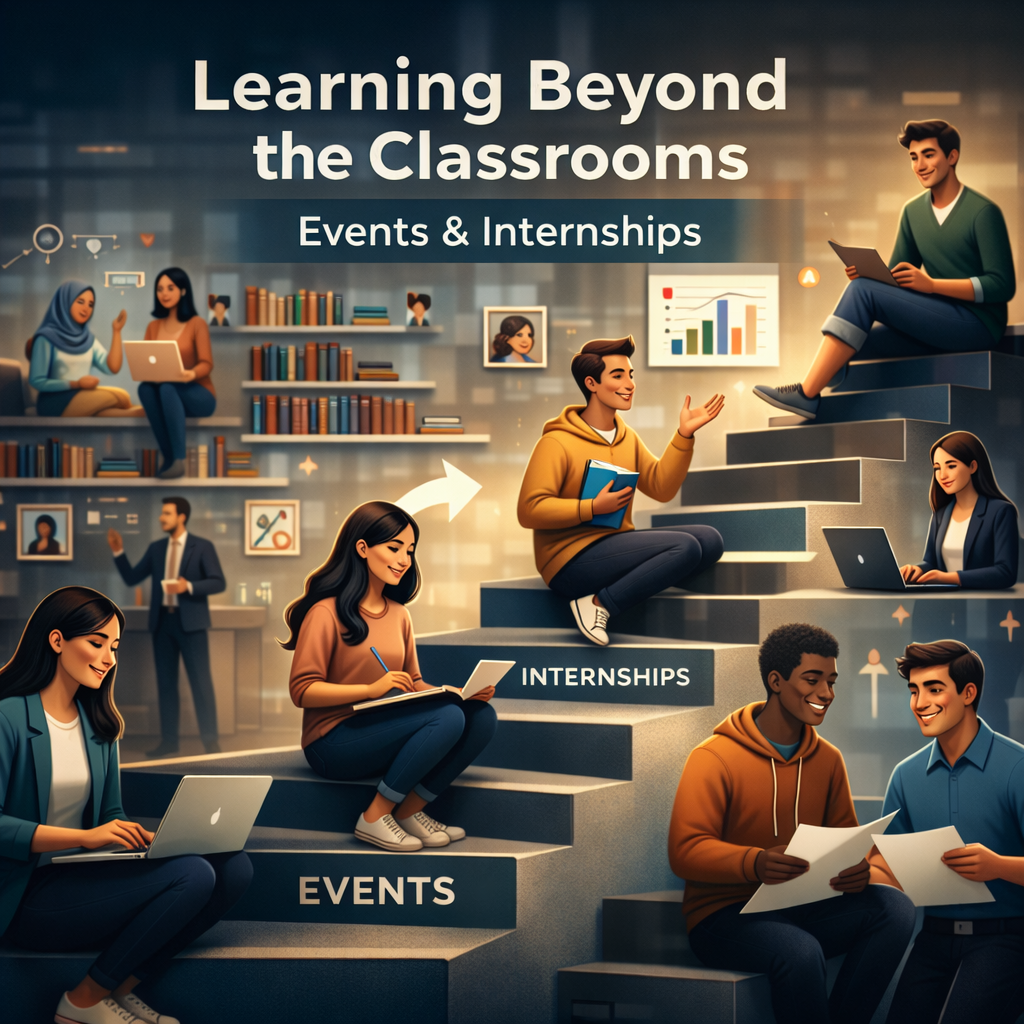
Practical Learning Outside the Classrooms for MBA Aspirants
Nowadays, learning is not just about reading books; in fact, it is about implementing what you have learned in real-life situations, especially for MBA aspirants who return after a gap.
Practical knowledge is a necessity for students who are taking up MBA after a gap, because it enables them to adapt better.
For instance, internships, workshops, seminars, etc., help students transform their theoretical knowledge into practical skills, thus making them more marketable.
For example, hackathons for computer science students or Tally for commerce students are requirements that textbooks alone cannot meet.
Global Exposure and Networking Opportunities
Exposure to multinational corporate culture, leadership, and global trends through internships and workshops can provide students with increased opportunities in a significant manner.
Moreover, networking opportunities, conferences, and meetings can help students establish professional networks and get insights from experienced mentors in different fields.
As a result, this can help students get a global perspective, which can help them understand how businesses can be conducted in different environments and industries around the world. Consequently, this enhances their self-confidence and enables them to become leaders in multinational corporations.
Ways to Learn Beyond the Classroom
MBA students can enhance their knowledge by participating in various activities that offer them practical exposure and skills to make them ready for the industry. These are:
- Global Exposure: Internships, study-abroad programs, and international hackathons.
- Skill Development: Online courses, coding camps, and language exchange programs.
- Networking Opportunities: Conferences, meetup events, and alumni meetings.
- Experiential Learning: Volunteering, freelance work, and entrepreneurship programs.
In addition, these avenues allow MBA students to apply their learning, develop their critical thinking skills, and sharpen their decision-making skills, apart from acquiring skills that are much appreciated in the industry.
Core Skills Developed Through Experiential Learning
Experiential learning is a dynamic and transformative learning methodology that empowers students to develop essential critical skills pivotal for their success and excellence in their chosen professions, including:
- Practical Problem Solving: Internships and industrial visits help students learn to think and strategize.
- Professional Communication: Working in groups, with their supervisor, and networking sessions help students learn to communicate effectively.
- Time and Project Management: Managing internships, workshops, and other academic commitments help students learn to become efficient in managing their time.
- Industry Awareness: Experiential learning helps students get a better understanding of the challenges they might face in their future careers.
However, experiential learning provides students with a variety of benefits, but there are certain challenges they might face, such as balancing responsibilities, adjusting to a new culture, and meeting deadlines.
FBS Business School: Shaping Future Business Leaders in Vijayawada
The choice of the right institution plays a significant role in filling the gap between academic and professional skills. For example, FBS Business School is a business school located in the city of Vijayawada. At FBS Business School, the focus is on providing students with an experiential learning approach, which involves internships, industrial visits, workshops, and student engagement programs.
By providing students with an experiential learning approach, along with the well-structured MBA course, FBS Business School makes sure that the students are geared for professional growth by providing them with both academic and professional knowledge.
Therefore, students are able to perform in different professional arenas and become competent business leaders.
Conclusion: Learning Beyond the Classroom
Experiential learning, which includes activities such as internship, global exposure, and skill development, is an important part of an MBA course. Moreover, it enables the students to implement their theoretical knowledge and develop skills and abilities in critical thinking and decision-making. Consequently, these activities help the students prepare to face the challenges in the workplace with confidence.
Furthermore, FBS Business School plays a crucial role in helping students develop these skills, thus preparing them to become not only skilled managers but also efficient and adaptable business leaders in the global professional arena.