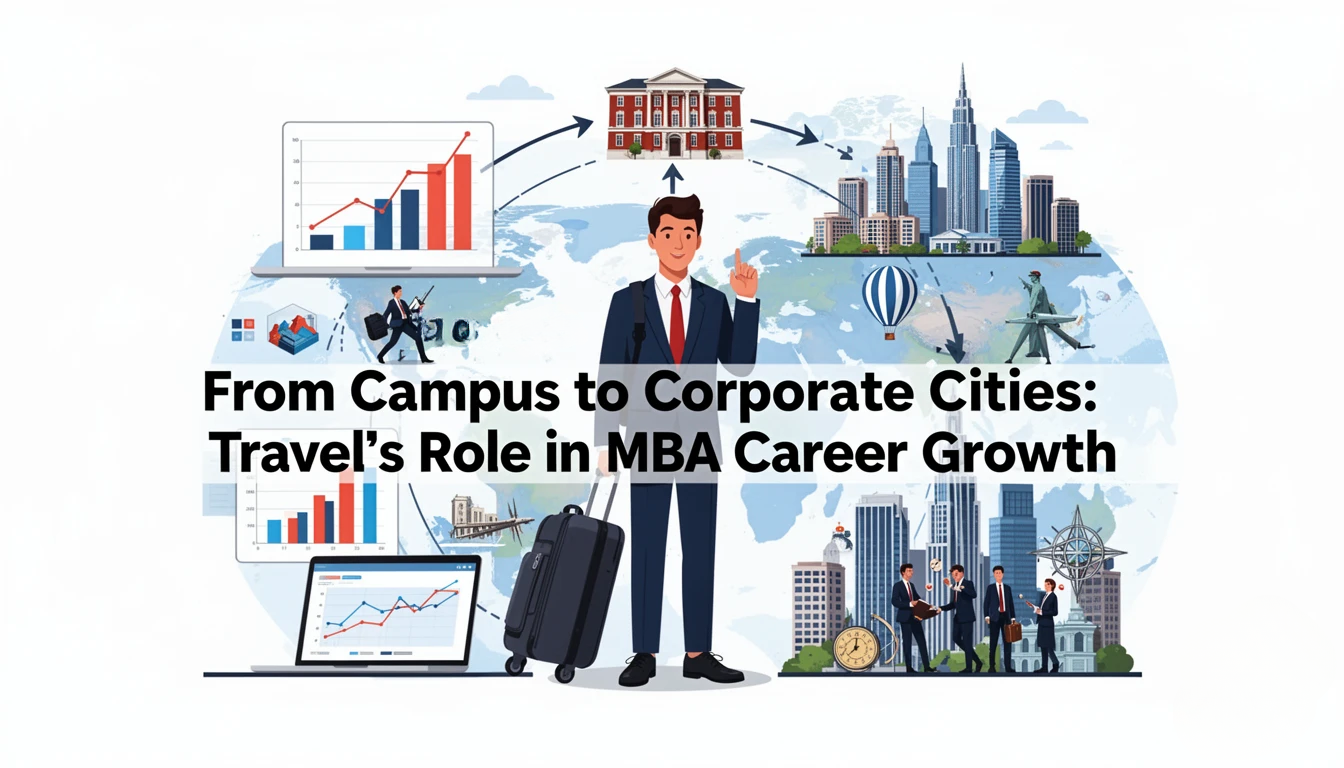
In today’s globalized business landscape, MBA education extends far beyond classroom learning. Modern business schools are increasingly integrating travel, international exposure, and global immersion into their programs. From campus corridors to corporate cities across the world, travel has become a powerful catalyst in shaping MBA students into industry-ready professionals.
Travel is no longer just an added experience—it is a strategic component of MBA career growth that equips students with global perspectives, practical insights, and competitive advantages in the job market.
The Shift from Classroom Learning to Global Exposure
Traditional MBA programs focused heavily on theoretical frameworks and case studies. However, the evolving demands of the corporate world now require professionals who can navigate international markets, understand cultural differences, and make decisions in diverse environments.
Travel-based learning—through international study tours, exchange programs, internships, and corporate visits—bridges this gap. It allows students to step outside their academic environment and engage directly with real-world business ecosystems.
Exposure to different countries and markets helps students understand how business practices vary globally, enabling them to think beyond local perspectives and develop a broader business mindset.
Developing a Global Business Perspective
One of the most significant benefits of travel during an MBA is the development of a global business perspective.
When students visit different countries or corporate hubs, they observe:
- Diverse consumer behaviours
- Varied economic conditions
- Different regulatory environments
- Unique business strategies
This exposure helps students understand that there is no “one-size-fits-all” approach to business. Instead, strategies must be adapted to specific markets and cultural contexts.
Such experiences enhance critical thinking and innovation, enabling students to design solutions that are effective across global markets.
Enhancing Cultural Intelligence and Adaptability
In a world where businesses operate across borders, cultural intelligence has become a crucial skill.
Travel enables MBA students to:
- Interact with people from diverse cultural backgrounds
- Understand different communication styles
- Adapt to new environments and challenges
This cultural exposure fosters empathy, flexibility, and adaptability—qualities essential for managing global teams and leading international projects.
Additionally, students who gain international exposure often become more confident, independent, and self-reliant, which positively impacts both personal and professional growth.
Building a Powerful Global Network
Networking is one of the most valuable assets in an MBA journey, and travel significantly expands these opportunities.
Through international exposure, students can connect with:
- Industry professionals
- Global peers
- Professors and mentors
- Business leaders
These connections often lead to internships, job opportunities, and collaborations in the future. A strong global network enhances career mobility and opens doors to opportunities across different countries.
Moreover, global MBA programs emphasize networking as a key factor in long-term career success, helping students build relationships that extend beyond borders.
Gaining Real-World Business Insights
Travel allows MBA students to move beyond textbooks and witness business operations in real environments.
Through:
- Industry visits
- Corporate interactions
- International internships
- Live consulting projects
students gain firsthand exposure to how companies function in different markets.
This experiential learning helps students understand real business challenges, operational strategies, and decision-making processes. It also allows them to apply classroom knowledge to practical situations, making learning more impactful and relevant.
Boosting Employability and Career Opportunities
In a competitive job market, employers seek candidates who bring more than academic qualifications.
Travel and international exposure make MBA graduates:
- More adaptable
- Globally aware
- Better at problem-solving
- Skilled in cross-cultural communication
Studies show that employers highly value international exposure, as it equips candidates with essential workplace skills such as teamwork, adaptability, and communication.
Additionally, students with global experience often stand out during recruitment processes and are more likely to secure roles in multinational companies or international markets.
In fact, many MBA graduates leverage international exposure to achieve career shifts across industries, roles, and even countries—demonstrating the strong link between mobility and career growth.
From Campus to Corporate Cities
The journey of an MBA student today is no longer confined to campus boundaries. Instead, it extends to major corporate cities and global business hubs such as New York, London, Singapore, Dubai, and Mumbai.
These cities act as real-world classrooms where students:
- Observe industry trends
- Engage with corporate professionals
- Experience fast-paced business environments
This transition from campus learning to corporate exposure prepares students to seamlessly integrate into professional roles after graduation.
The Future of MBA Education: Learning Beyond Borders
As globalization continues to reshape industries, MBA programs are increasingly focusing on experiential and travel-based learning.
Future MBA education will likely include:
- More international immersion programs
- Cross-border collaborations
- Global internships
- Virtual and physical global business projects
Travel will continue to play a vital role in shaping future business leaders who can operate effectively in interconnected global markets.
Conclusion
Travel has emerged as a transformative element in MBA education, bridging the gap between academic learning and real-world business experience. From developing global perspectives and cultural intelligence to building networks and enhancing employability, travel equips MBA students with the skills needed to thrive in today’s competitive corporate world.
The journey from campus to corporate cities is not just about geographical movement—it is about growth, exposure, and transformation. Through travel, MBA students gain the confidence, competence, and global mindset required to succeed as future business leaders.