In today’s competitive and dynamic business environment, MBA education goes far beyond textbooks and classroom lectures. While theoretical knowledge builds a strong foundation, it is practical exposure that truly prepares students for real-world challenges. One of the most effective ways MBA programs bridge this gap is through industrial visits.
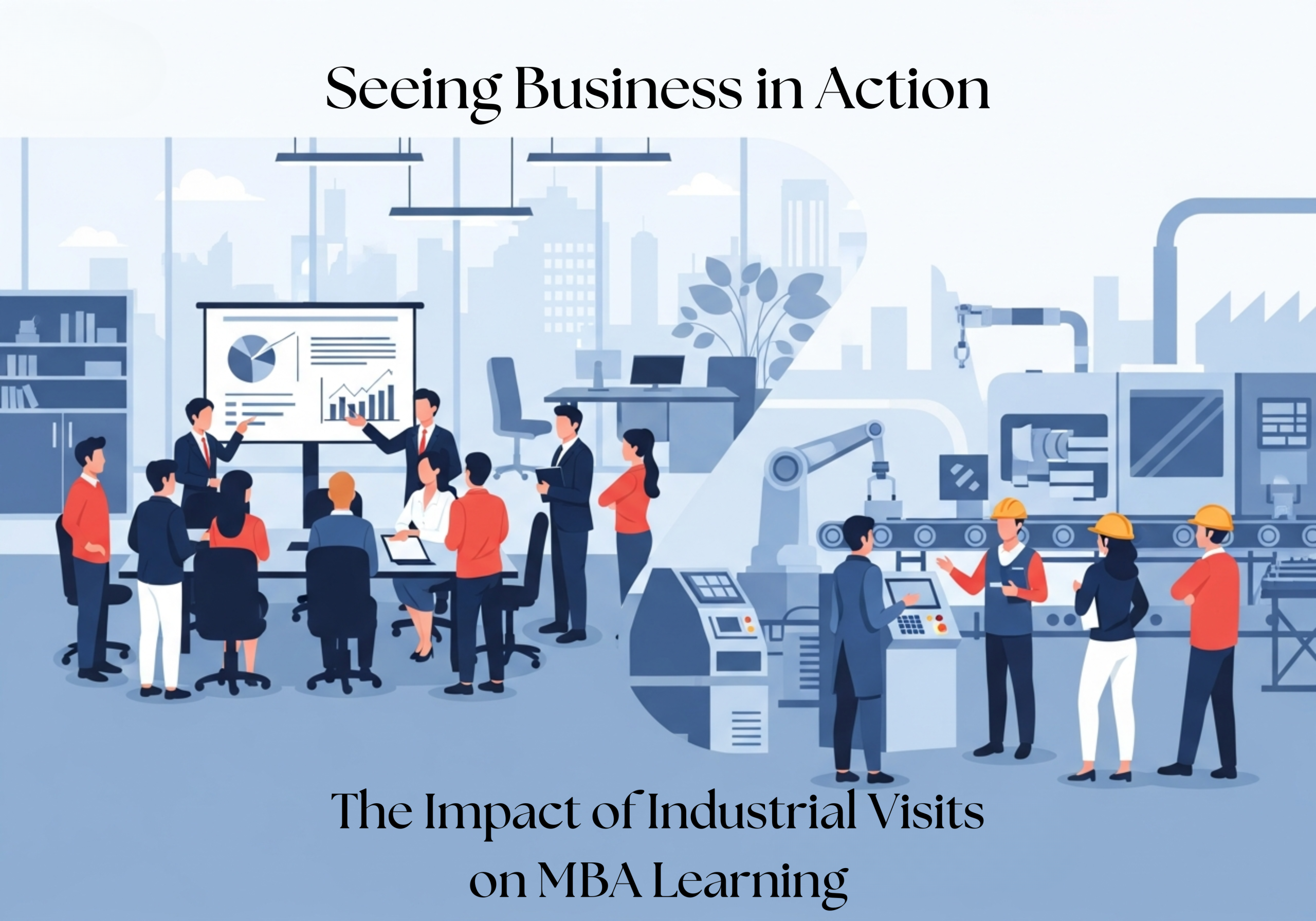
Industrial visits allow students to step into real business environments, observe operations, interact with professionals, and understand how organizations function in practice. These experiences transform academic learning into meaningful insights, making MBA education more relevant, engaging, and impactful.
What Are Industrial Visits?
Industrial visits are structured educational tours where MBA students visit companies, factories, or corporate organizations to gain firsthand exposure to business operations.
These visits provide students with an opportunity to:
- Observe real-time processes and workflows
- Understand management practices
- Interact with industry professionals
The primary goal is to bridge the gap between theoretical learning and practical application by exposing students to real-world business environments.
Bridging the Gap Between Theory and Practice
One of the most significant impacts of industrial visits is their ability to connect classroom concepts with real-world applications.
While lectures teach models, frameworks, and strategies, industrial visits show:
- How production processes actually work
- How decisions are implemented in organizations
- How different departments coordinate
Students can witness how theories they study—such as supply chain management, marketing strategies, or financial planning—are applied in real business scenarios. This experiential learning deepens understanding and makes concepts more practical and relatable.
Gaining Firsthand Exposure to Business Operations
Industrial visits provide MBA students with direct exposure to how businesses function on a daily basis.
Students get to:
- Observe production lines, systems, and operations
- Understand organizational structures and workflows
- Learn about company policies and management practices
This hands-on exposure helps students develop a clearer understanding of how businesses operate beyond theoretical assumptions. It also familiarizes them with workplace environments and professional expectations.
Enhancing Practical Knowledge and Critical Thinking
Seeing business processes in action encourages students to think critically and analyze real-world problems.
During industrial visits, students:
- Identify challenges faced by organizations
- Observe problem-solving strategies
- Analyze decision-making processes
This helps them move beyond memorization and develop analytical skills. By connecting theory with observation, students become better equipped to apply knowledge in practical situations.
Interaction with Industry Experts
One of the most valuable aspects of industrial visits is the opportunity to interact with industry professionals.
Students can:
- Ask questions and gain insights from experienced managers
- Learn about industry trends and future opportunities
- Understand career paths and expectations
These interactions provide practical knowledge that is often not available in textbooks and help students build a clearer vision of their career goals.
Building Professional and Soft Skills
Industrial visits contribute significantly to the development of essential professional skills.
Students improve:
- Communication and interpersonal skills
- Teamwork and collaboration
- Observation and analytical abilities
Exposure to real workplace environments also helps students understand professional behavior, work ethics, and organizational culture—key elements for success in corporate careers.
Understanding Industry Trends and Technologies
Industrial visits expose MBA students to the latest developments in industries, including emerging technologies and innovative practices.
Students gain insights into:
- Current market trends
- Technological advancements
- Industry challenges and future opportunities
This awareness helps students stay updated and better prepared for evolving business landscapes.
Improving Career Clarity and Employability
Industrial visits play a crucial role in shaping students’ career paths.
By observing different industries and roles, students can:
- Identify their areas of interest
- Understand job roles and responsibilities
- Make informed career decisions
Additionally, these visits often create networking opportunities that can lead to internships, training programs, or even job offers, enhancing overall employability.
Learning Beyond the Classroom
Industrial visits represent a shift towards experiential learning in MBA education.
They:
- Make learning interactive and engaging
- Improve retention of knowledge
- Provide real-world context to academic concepts
Such experiences help students become more confident, adaptable, and industry-ready professionals.
Conclusion
Industrial visits have become an integral part of MBA education, offering students the opportunity to see business in action. By bridging the gap between theory and practice, these visits enhance learning, build practical skills, and prepare students for real-world challenges.
From understanding business operations to interacting with industry experts, industrial visits provide a comprehensive learning experience that shapes future managers and leaders. In essence, they transform MBA students from passive learners into active observers and problem-solvers—ready to succeed in the corporate world.