Job Market in This Era
The job market today is highly competitive. Every year, thousands of students graduate, making it harder to stand out. In the past, good grades were enough to secure a job. However, things have changed.
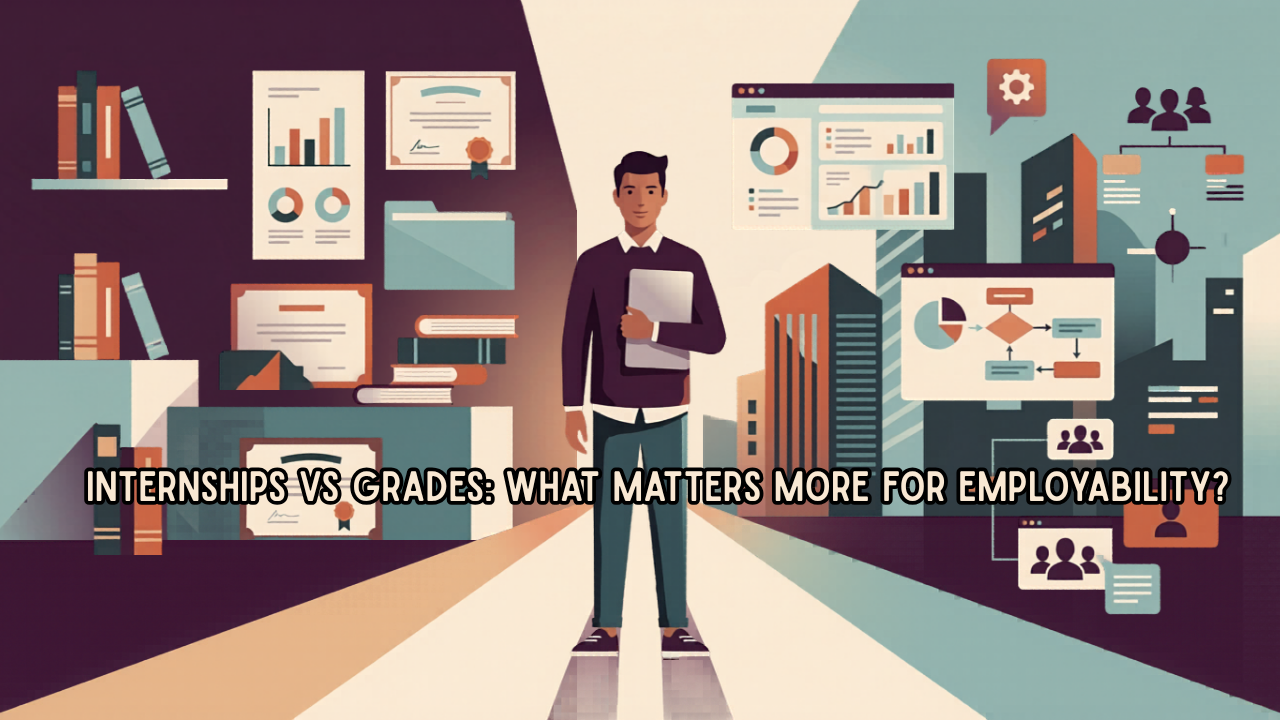
Today, employers expect more than academic performance. They look for candidates who can handle real work situations and adapt quickly. As a result, the debate around internships vs grades has become more relevant than ever.
Changing Trends in Employability
Skills Over Academic Scores
Employability now depends more on practical skills than just marks. While grades show your academic understanding, they do not reflect your ability to apply knowledge.
On the other hand, internships help students gain real-world exposure. Because of this, employers often prefer candidates who have hands-on experience.
What Recruiters Expect Today
Recruiters now focus on multiple qualities. For instance, they value communication skills, teamwork, and problem-solving ability.
In addition, students who share internship experiences during interviews often leave a stronger impression. This is because they can explain how they handled real tasks instead of only discussing theory.
Practical Knowledge vs Theoretical Learning
Learning Beyond the Classroom
Classroom education mainly focuses on theory. Although it builds a strong foundation, it does not fully prepare students for workplace challenges.
In contrast, internships allow students to work on real projects. They learn how to meet deadlines, solve problems, and interact with professionals.
Real Work Experience Matters
Experience gained during internships adds significant value. Students understand workplace expectations and develop confidence over time.
Therefore, practical exposure plays a major role in shaping a student’s career readiness.
How Internships Make Students Job-Ready
Understanding Workplace Culture
Internships introduce students to professional environments. They learn discipline, time management, and workplace behavior.
Moreover, this experience reduces the gap between academic life and professional life.
Building Essential Skills
Internships also help students develop key employability skills. These include communication, teamwork, and decision-making.
As a result, students become more prepared to handle job responsibilities effectively.
Importance of Internships in Today’s World
Learning by Doing
Internships provide a practical learning experience. Instead of only studying concepts, students apply them in real situations.
Because of this, their understanding becomes deeper and more meaningful.
Boosting Confidence
Working in a professional setting increases confidence. Students become comfortable sharing ideas and taking responsibility.
Consequently, they feel more prepared when they start their first full-time job.
Career Growth Through Internships
Exploring Career Paths
Internships help students discover their interests. They can identify their strengths and improve their weaknesses.
In addition, this clarity helps them make better career decisions.
Improving Job Opportunities
Having internship experience strengthens a resume. Employers often prefer candidates who already have some exposure to real work.
Therefore, internships increase the chances of getting better job opportunities.
Internships vs Grades: What Employers Value More
Understanding the Difference
Grades show how well a student performs academically. They reflect knowledge and discipline in studies.
However, they do not show how a student performs in real work situations.
Why Internships Have an Edge
Internships demonstrate practical ability. Students learn how to manage tasks, work in teams, and solve real problems.
Although good grades can help you get an interview, internship experience often helps you secure the job. Simply put, grades show what you know, while internships show what you can do.
Conclusion
Final Thoughts
In today’s competitive world, practical experience is becoming more important than academic scores. The discussion around internships vs grades clearly shows that employers value skills and real-world exposure.
Therefore, students should focus not only on academics but also on gaining hands-on experience. By doing so, they can improve their employability and build a successful career.