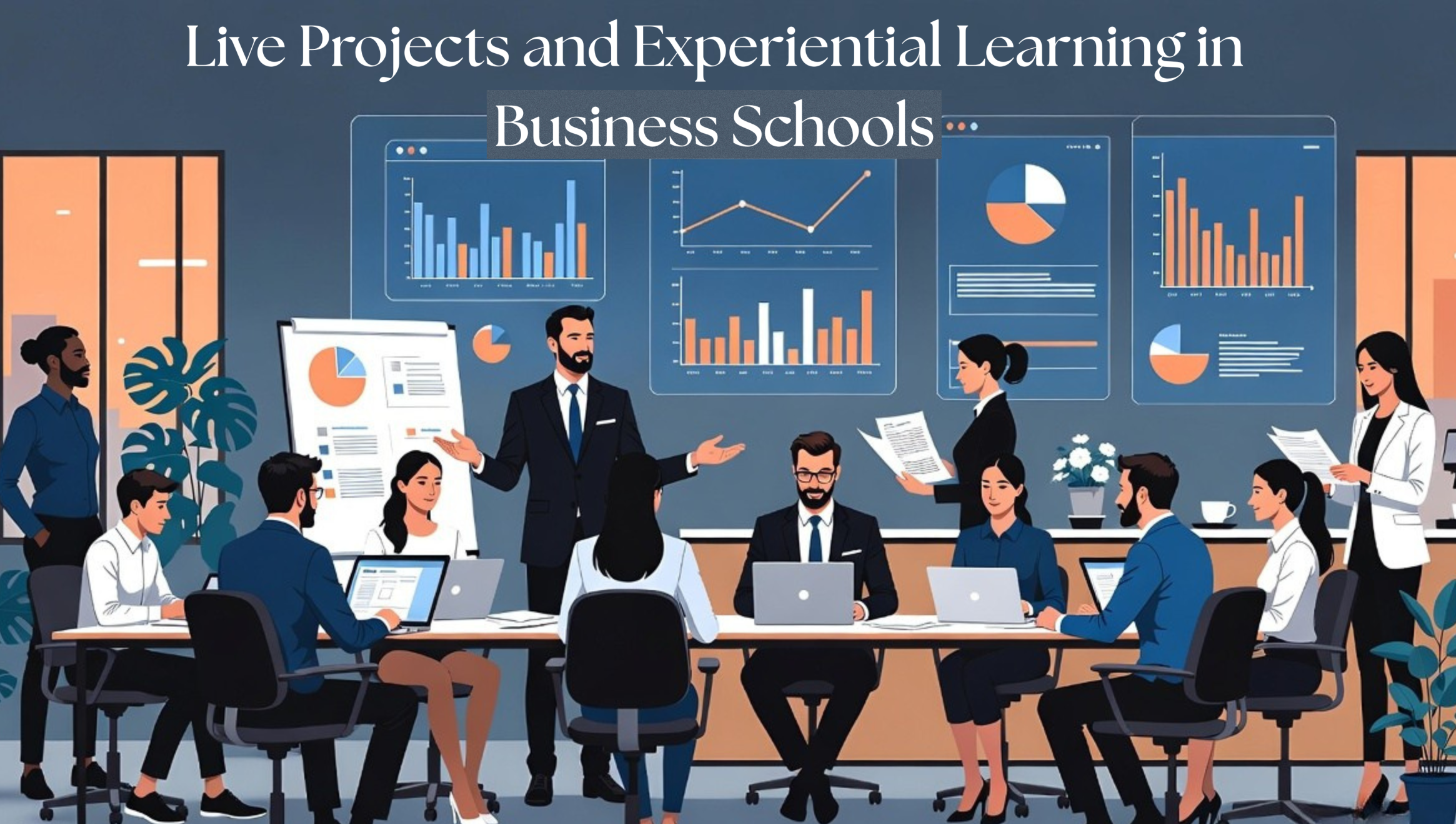
In the business world today, students need more than classroom learning to get ready for the real world. Companies want people who have graduated and know how to use what they learned in real-world situations. So, business schools are focusing more on projects and hands-on learning. This means students work with companies, solve real problems, and get experience that helps them connect what they learn in class to what happens in the real business world. Business schools are doing this because it helps students learn by doing things, not just reading about them. This way students get to work on projects and learn from their experiences, which is very important, for business students.
Experiential learning and live projects transform students from passive recipients of information into active learners who develop critical skills such as problem-solving, decision-making, teamwork, and leadership — all of which are essential for the modern workplace.
What Are Live Projects?
Live projects are like assignments where students from business school work with companies to solve real problems that these companies are facing. These projects can be things, like helping a company figure out what to do researching what people buy coming up with business ideas or finding ways to make the company work better. At FBS Business School, live projects allow students to work directly with organisations on real business problems, giving them valuable industry exposure.
Students do not just work on made-up examples they work on issues that companies have and they give the companies ideas that they can actually use to make things better. Live projects are a way for business school students to work on real business challenges.
Why Live Projects Matter
One of the things about live projects is that they get students ready for what it is like to work in a real company. When students work on live projects, they are required to:
- Figure out how to solve real problems that live projects have
- Learn how to work with real people on live projects
- Understand what it takes to make live projects successful
This hands-on approach followed at FBS Business School helps students transition smoothly from classroom learning to corporate environments. One of the most significant advantages of live projects is how they prepare students for real business environments. When students engage with live challenges, they must:
- Understand and define business problems
- Collect and analyse real data
- Interact with stakeholders and clients
- Present solutions in a professional format
Skills Developed Through Live Projects
Live projects and hands-on learning experiences really help students develop:
- Critical thinking and analytical skills
- Teamwork and leadership
- Communication and presentation skills
- Problem-solving under uncertainty
- Adaptability to change
These are precisely the skills that top recruiters look for in MBA and business school graduates.
Understanding Experiential Learning in Business Education
Learning by doing is the idea behind experiential learning. Experiential learning in business education is about doing things like business simulations, working for a company to get experience, being part of a program that teaches you about companies, helping clients with their problems and working on projects with companies. These things help students use what they learned in class in life and see how it really works. Experiential learning is a strategical way for students to learn by doing and it is very useful, for them.
Experiential learning is a core teaching philosophy at FBS Business School, where students learn by applying concepts through real-world business experiences. They get to try things out for themselves in a business setting. This makes learning about business more interesting. It means something to them. Students do not just learn about ideas they also see how those ideas work in companies. Experiential learning helps students understand how what they learn in school works, in the world of business it brings academic learning and real business practices closer together.
Role of Experiential Learning in Skill Development and Employability
Many business schools also use simulation labs to create virtual business environments where students make strategic decisions under pressure. These labs help students develop analytical skills and business acumen in a controlled and practical setting. Experiential learning prepares students to handle real business challenges and is highly valued by employers, who prefer graduates with practical skills and real-world experience.
Experiential learning plays an important role in improving employability. This type of learning helps people get ready for the world. When people do learn they actually do the things they are learning about. This makes it very effective.
Experiential learning enhances employability. It does this in ways.
- It helps people learn by doing things
- It helps people work with others
- It helps people solve problems
Experiential learning is especially valuable for people who want to get a job. Employers prefer candidates who have real-world experience. It equips learners with the skills and experiences they need to succeed and increases career readiness.
Examples of Experiential Learning in Action
- Capstone Projects and Consultative Challenges
Many global business schools require a capstone project in the final year. For example, students may work on consultative assignments with partner firms, where they are expected to research market opportunities, define strategies, and present recommendations. These projects give students end-to-end experience of managing real business problems.
- Industry Immersion and Field Engagements
In some MBA programs, students travel for field immersions or corporate site visits, where they engage directly with business leaders and work on strategic challenges. These experiences help students not only learn academic content, but also understand the nuances of industry culture and operational realities.
- Live Projects with Business Partners
At FBS Business School’s MBA, experiential learning is central to the curriculum. Students collaborate with real organisations to tackle marketing, consultancy, or strategic problems, gaining guidance from mentors and exposure to industry expectations.
Enhancing Employability Through Live Projects
Employers today seek graduates who can adapt quickly, think critically, and collaborate effectively. Live projects help students develop these skills by working on real-world problems. Through such experiences, students build a strong portfolio that showcases their capabilities, helping them stand out during job interviews. It also demonstrates their ability to contribute to a company from day one. Graduates of FBS Business School benefit significantly from this exposure, as live projects improve employability and workplace readiness. Additionally, experiential learning strengthens industry connections, expands networking opportunities, and can lead to internships or job placements.
Experiential Learning and Real-World Skill Development
Live projects and hands-on learning enable students to apply classroom knowledge to real business situations. These experiences help them develop practical skills and prepare for dynamic, ever-changing global job markets. Business schools that integrate experiential learning—such as capstone projects, industry collaborations, industrial visits, and simulations—play a crucial role in shaping future business leaders. By embedding these approaches into its curriculum, FBS Business School ensures students graduate with not only theoretical knowledge but also the confidence and experience needed to succeed in the modern business environment.