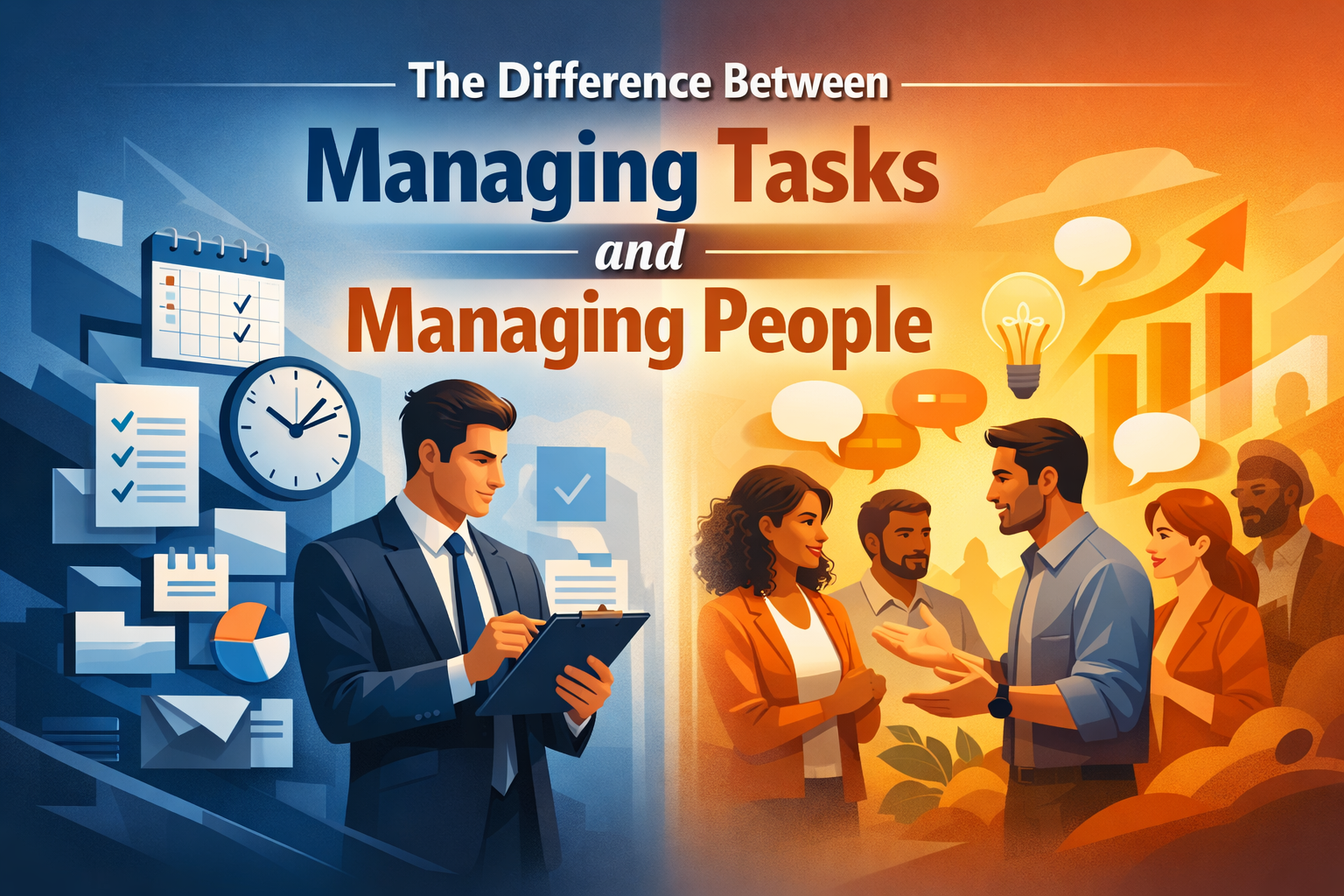
In managing tasks and managing people, people usually think that managing tasks is the same as managing people. No, both are different. In managing tasks, we need to look at work, deadlines, and completing work. In managing people, we need to look at people individually, their feelings, and their growth. It is essential to know that effective teams require effective task management, as well as effective people management.
What Managing Tasks Means
Managing tasks entails making sure that the jobs are executed satisfactorily and on time. It includes planning daily work, setting deadlines, giving tasks to team members, and checking progress. A task-oriented manager checks schedules, reports, and results to see if everything is working as planned. Efficiency and accuracy are the main aims.
Such a form of management is significant, as it helps keep things organized. Should task management not be utilized, things can become messy, and the quality of products can decline. By task management, teams can achieve their set goals step by step. Nonetheless, task management is not always concerned with how one feels.
What Managing People Means
People management is all about understanding and supporting the people who do the work, being concerned with motivation, communication, and teamwork rather than tasks. It means understanding what team members need to perform better and feel confident at work.
People feel valued and heard when they are well managed. Leaders listen to ideas, encourage learning, and help the growth of their team members. People management involves the integration of trust and a very positive work environment where people are comfortable sharing their thoughts. This helps keep the people motivated towards work.
Communication: Instructions vs Conversations
Task management mostly involves giving instructions. Managers tell employees what to do, how to do it, and when it must be done. Communication tends to go one way.
People management focuses on conversations. Leaders listen to their team, ask questions, and encourage open discussions. This communicates to the employee that they have been heard and understood. In return, it builds stronger working relationships.
Handling Mistakes
Mistakes in the case of task-based management are generally viewed as a problem that holds up work. Workers in this regard may sometimes fear making mistakes due to the possibility of criticism.
Errors are opportunities for learning in human management. The person in charge helps the person when they make a mistake and teaches them how to improve. This generates a good environment, and the person is not afraid of trying new things.
Short-Term Results vs Long-Term Growth
Managing tasks helps achieve quick results. It is helpful when deadlines are tight and work must be completed quickly.
Managing people focuses on long-term growth. Leaders spend time developing skills, confidence, and teamwork. This, in turn, helps employees develop over time, thereby leading to improved performance and teams in the long run.
Why the Difference Is Important
All tasks may be completed, but if people are feeling stressed, unattended, or disgruntled, no one will succeed in the long term. Tragically, one may manage tasks, but managing people will deliver long-term success.
When they feel they are being supported, they will do better and take ownership of their tasks.
Good leaders know that people are not machines; they need to be encouraged, informed, and need purpose. When a good leader pays attention to people as well as tasks, they can build strong, confident, and cooperative teams.
Why Both Are Needed
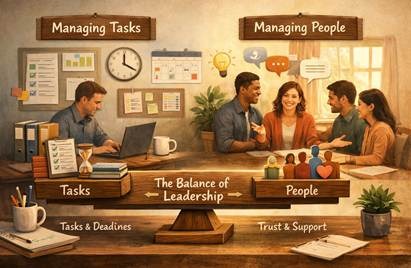
The most effective leaders are those who are able to manage tasks and people. They ensure that work is structured and there are clear objectives, but they also care about the people they are working with.
If tasks are clear and one is supported, they will become more productive. In order for the workplace to be successful, leaders need to manage their tasks well and understand their people.
Bridging Task and People Management Through MBA Education at FBS
The FBS Business School which is the top business school in Andhra Pradesh,the MBA program educates students to achieve a proper balance between task management and people management. The program trains students to manage deadlines while motivating others. The program not only enhances strategic decision-making skills but also improves communication, leadership psychology, and team-building skills. The training program develops leaders who can achieve results while building strong and confident teams.
The program also trains students to manage challenges in the workplace, including conflict resolution, pressure to perform, and team management. Students learn to delegate tasks, track progress, and hold people accountable without ignoring well-being. Classroom interactions and teamwork further enhance active listening, problem-solving, and decision-making skills in a dynamic business setting. By managing tasks and people, the program trains future managers to build productive workplaces where results are achieved and people continue to develop.