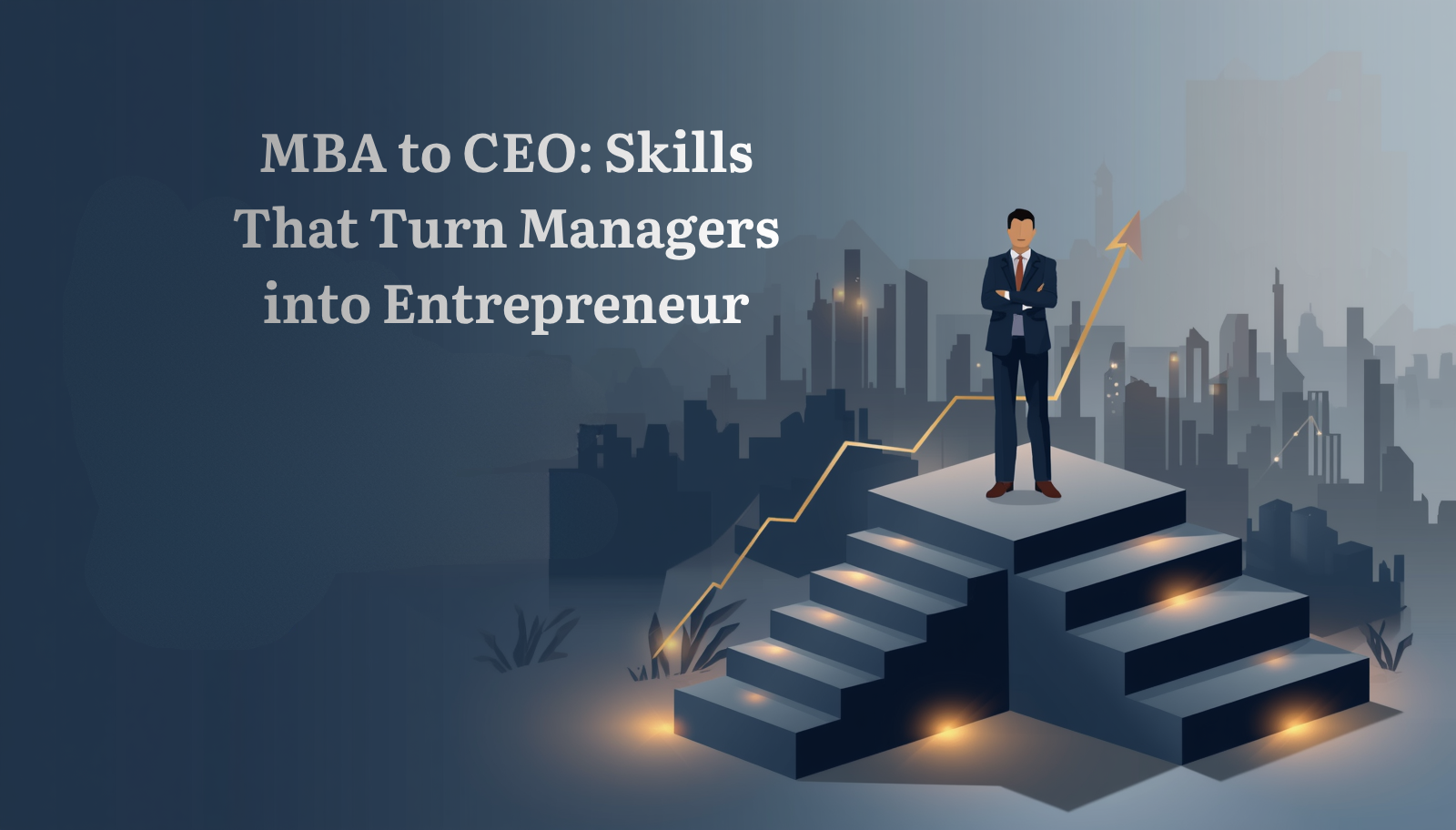
The transition from an MBA graduate to a chief executive officer requires disciplined learning, exposure, business management fundamentals, and leadership development.
In addition, today’s organizations recognize professionals who possess the qualities of an entrepreneur, strategic thinking, and innovation skills along with business operations expertise.
Leadership Development and Visionary Leadership
Leadership development helps create managers who are decision-makers, team motivators, and demonstrate visionary leadership qualities on a daily basis in an organization.
In addition, good communication skills enhance influence, whereas team building fosters collaboration that leads to business success.
Clear communication skills guide strategy discussions and strengthen executive presence
Team building improves collaboration across departments and strengthens leadership development
Visionary leadership aligns teams with organizational mission and long term value creation
Strategic Thinking and Business Acumen
Strategic thinking allows professionals to analyze markets, evaluate competition, and apply business acumen to guide sustainable organizational expansion globally.
Consequently, financial acumen, risk management awareness, and problem-solving capability transform routine business management roles into impactful leadership positions across industries.
Data-driven decision-making skills enhance strategic thinking capabilities
Financial knowledge increases budgetary forecasting and development of sustainable growth strategies
Risk management provides protection to organizations in uncertain and changing market environments
Innovation, Adaptability, and Entrepreneurial Mindset
In addition, innovation and creativity can motivate leaders to seek out new opportunities, while adaptability can be used to respond quickly to disruptions in the market.
Therefore, an entrepreneurial mindset inspires experimentation, enhances problem-solving skills, and speeds up the manager to CEO transition in competitive industries across the world today.
Innovation and creativity encourage product development and differentiation
Adaptability enhances change management in market transformation
Growth mindset fosters learning in top management learning programs
Networking and Executive Presence
Networking also fosters partnerships with investors, mentors, and industry leaders from the top B schools and best colleges in the world today.
In addition, executive presence enhances credibility in negotiations, leadership communication, and high-level strategic decision-making discussions in today’s global business environments.
- Networking enhances career mobility in the global business management ecosystems
- Executive presence enhances confident communication with stakeholders and boards
- Alumni networks from the top B schools promote mentorship and collaboration
Role of Management Education
Executive courses in top management build skills in strategic thinking, financial management, leadership building, and operational management necessary for entrepreneurial leadership in today’s enterprises.
Thus, students from the best colleges and top B-schools acquire business acumen, networking experience, and decision-making skills for leadership.
Operational Expertise and Decision-Making Skills
Operational expertise assists leaders in executing strategies, and disciplined skills in decision-making enable efficiency in dealing with complex organizations globally today.
Moreover, comprehensive knowledge of business management enhances planning, allocation, and effective performance improvement in competitive industries globally today.
- Operational expertise improves supply chain coordination and service delivery
- Decision-making skills support faster strategic responses
- Business acumen aligns operations with long term corporate vision
Change Management and Growth Mindset
Modern executives champion change management initiatives that encourage adaptability, innovation, and resilience during technological and economic transformations across industries today
Meanwhile, growth mindset culture motivates experimentation, continuous learning, and leadership development across MBA programs and executive education platforms worldwide today.
- Change management helps organizations in restructuring and innovation processes
- Growth mindset enhances leadership resilience and innovation
- MBA courses in top B schools foster entrepreneurial mindset and networking
FBS Business School
FBS Business School focuses on leadership development, strategic thinking, and innovation driven learning through industry aligned top management courses today.
In addition, the programs focus on networking, financial literacy, communication skills, and change management to improve the transition process for the manager to CEO for the next leaders.
Therefore, the graduates develop an entrepreneurial mindset, operational expertise, and executive presence required for global business management careers in various industries across the world.
Final Thoughts
For a successful transition to become a CEO, one needs to have leadership qualities, entrepreneurial spirit, strategic thinking, and communication capabilities to have sustainable leadership growth.
Thus, professionals with innovation, financial, networking, and operational capabilities create a lasting impact in modern organizations globally in the form of visionary leadership.
Therefore, MBA education, top management courses, and continuous learning cultivate business acumen, adaptability, and confident executive presence for future CEOs.
Ambitious leaders pursue knowledge, networking, and innovation to shape resilient enterprises.