Breaking Routine Through Travel
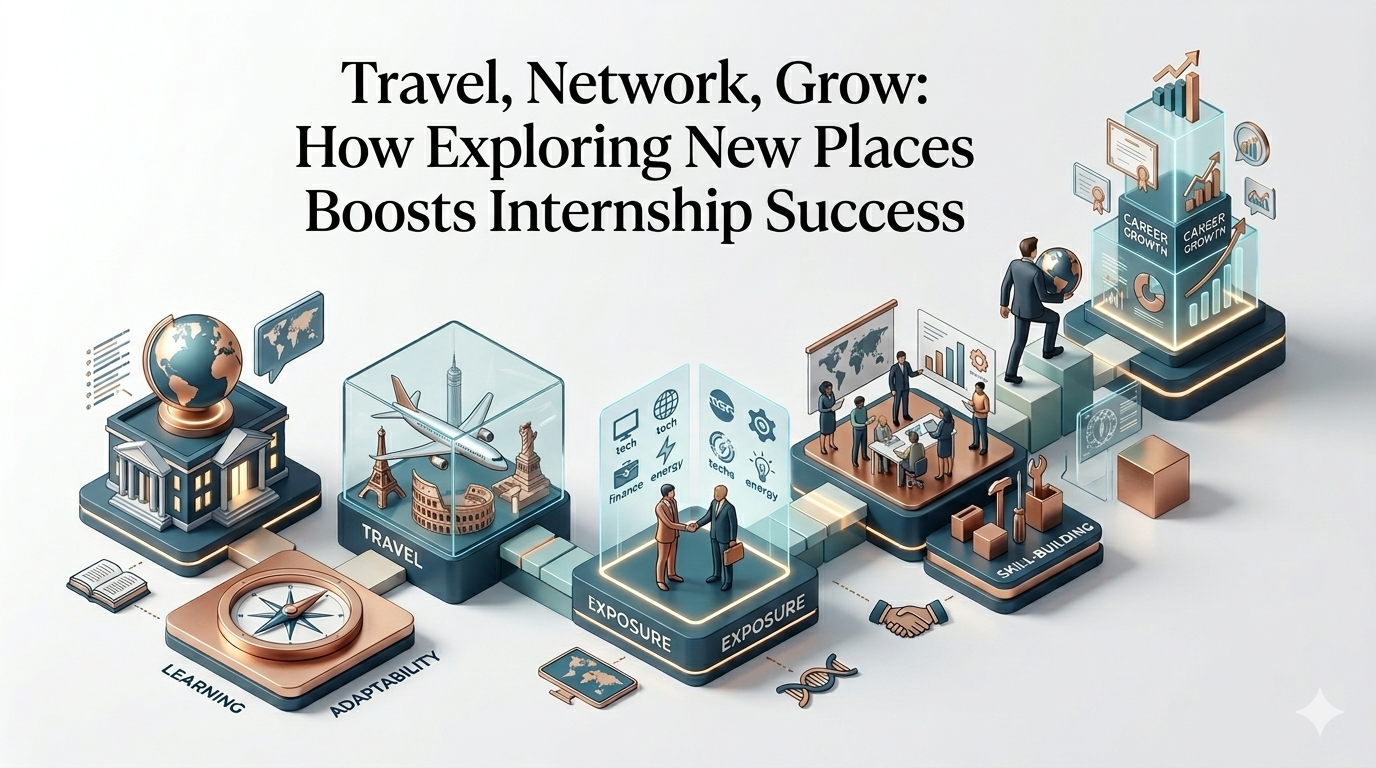
Routine is often comfortable but can hinder effective thinking. Travel is an effective way of breaking routine and exploring new environments.
New situations require instant decisions. Therefore, individuals begin thinking beyond structured academic frameworks.
Moreover, constant change builds adaptability in uncertain conditions. Handling unfamiliar environments strengthens decision-making under pressure.
As a result, this ability directly contributes to internship success in competitive business settings.
Travel and Personal Growth
Personal growth is not just applicable in theory; it has to be applied in practice. Travel helps individuals experience this.
Situations force individuals to make quick decisions.
In addition, this helps in the development of emotional and self-confidence skills. Making quick decisions in any situation helps in the development of self-confidence.
Thus, personal development goes hand in hand with professional development in the field of management.
Exploration and Skill Enhancement
Exploration helps in developing analytical skills because one learns to observe real-life situations. Here, one has to evaluate and interpret situations and respond to them immediately.
Thus, one becomes better at problem-solving.
Furthermore, exploration improves communication across diverse groups. Clear interaction becomes essential in unfamiliar environments.
Therefore, the experiences provide a motivation for the enhancement of skills, which is required in the current business world.
Networking Beyond Classrooms
Networking during travel becomes more organic and impactful.
In addition, the exposure to diverse people opens the mind to new perspectives in the business world.
Furthermore, the establishment of connections in different regions opens doors for long-term professional networks.
Therefore, the act of networking becomes a strategic advantage for career opportunities.
Travel and Internship Success
Travel experiences translate directly into internship success. Exposure to challenges improves confidence in handling responsibilities.
Practical knowledge helps to eliminate hesitations in professional activities.
Furthermore, adaptability supports performance in dynamic work environments. Communication also improves through diverse interactions.
As a result, a foundation for effective workplace contribution is laid
Role of Management Education
Top B schools focus on experiential learning to support theoretical knowledge. This exposure helps in better understanding.
Therefore, learning becomes more relevant to industry expectations.
Similarly, best management colleges integrate exploration into their curriculum. This helps to improve the level of awareness and decision-making capacity of businesses.
As a result, students gain stronger professional development advantages.
MBA Programs and Real-World Learning
Modern MBA programs focus on applying knowledge in real contexts. Travel and industry exposure help to support this approach in a very effective manner.
In this manner, the students are able to gain practical insights, which go beyond the classroom discussions.
In addition, the programs help to encourage the students to network in a very structured manner.
The students are encouraged
Therefore, students expand access to meaningful career opportunities.
Learning Environment and Growth
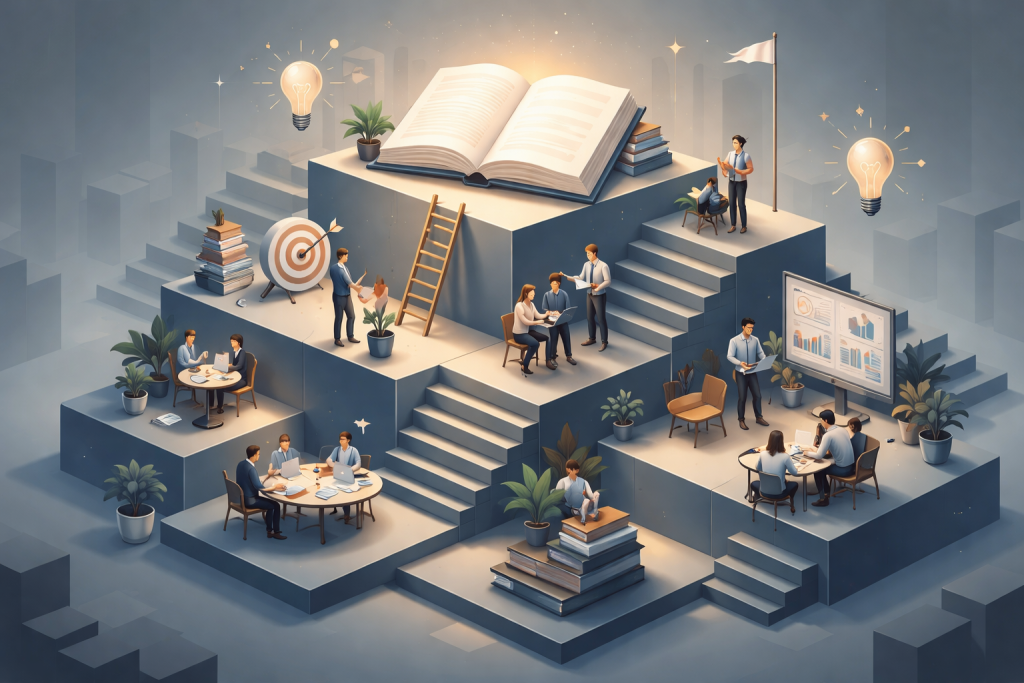
A strong learning environment balances academics with exploration. Growth becomes more meaningful when supported by practical exposure.
Therefore, individuals develop broader perspectives.
Moreover, such environments strengthen adaptability and confidence building. Exposure to challenges prepares individuals for leadership roles.
Thus, both personal growth and professional development improve steadily.
Career Opportunities Through Travel
Travel strengthens profiles by highlighting experience diversity and adaptability. Employers value candidates with real-world exposure.
Therefore, such experiences improve employability.
Moreover, cultural exposure signals readiness for global roles. This quality remains important in modern business environments.
As a result, career opportunities expand significantly.
Professional Development Through Exploration
Exploration contributes to constant improvement and strategy development. Each one contributes to the development of communication and interpersonal skills. As such, personal development is constant and measurable.
Additionally, exposure to different environments helps to build leadership skills. This is because understanding different perspectives helps to build decision-making skills.
Therefore, professional development continues beyond formal education.
Learning Environment at FBS Business School
FBS Business School emphasizes balance between academics and exploration. The curriculum helps students achieve personal and practical growth.
Students are encouraged to take up activities that promote personal growth and exposure to different industries through networking.
Furthermore, there are structured activities that promote flexibility and competitiveness in best management courses.
Conclusion
Travel, networking, and exploration together shape well-rounded professionals. Learning is made practical, relevant, and impactful.
These individual components all contribute to long-term growth.
Ultimately, these factors measure success in an internship as well as open doors to significant career opportunities.
Confidence building and increased flexibility continue to increase over time.
Therefore, continued exposure leads to long-term success in a management career.