
Digital Marketing
The Digital Marketing Program (DMP) prepares its students to have the knowledge needed to market brands, products, or services on the internet, i.e., the “digital marketplace.” The Digital Marketing Program Curriculum contains key components that must be included in order to have a successful digital marketing campaign, such as Search Engine Optimization, Search Engine Marketing, Social Media Marketing, Content Development, Email Marketing, Online Advertising, Web Analytics, and digital campaign strategy.
The curriculum contains both theory and practical applications on how to formulate, create, manage, and optimize a successful digital marketing campaign using the 7 digital marketing components listed above. With the rise in the number of Internet users and other digital device users (laptops, cellphones, and tablets) who use the Internet and digital devices daily for their shopping from manufacturers or retailers, the need for a digital marketing curriculum is more important than ever before.
Students will have an understanding of how to identify consumer behavior when they are using digital media, how to create a digital brand that is visible, and how to use data to help make their marketing decisions. In addition, by learning how to apply digital marketing strategies, students will improve their ability to adapt their marketing strategies to changing digital technologies in the future, which will assist them in meeting the overall business objectives.
Many career advantages exist for students pursuing a career in Digital Marketing. Individuals studying this field will develop their creative, analytical, communication, and strategic planning skills. In addition, individuals will be exposed to current technology and analytical tools used in the digital marketing industry during this course of study, which will further enhance their future employment prospects across various industry sectors.
Human Resource Management
The Human Resource Management program aims to educate students with the necessary skills and knowledge to manage people successfully across different business types, from large corporations, small businesses, and nonprofit organizations. The program covers all of the strategic and operational aspects of managing HR in an organization through a combination of theory and practical experiences gained through hands-on practice in real-world situations. Students gain knowledge on many topics, including recruiting, hiring, and onboarding new employees, training/development, performance evaluations, compensation/benefits, employee engagement, workplace culture, labor relations, and strategic planning for HRM. This allows students to understand how to best combine human capital with the overall mission and goals of the organization, ultimately driving growth for both the organization and the employee.
Organizations need to recognize the value of Human Resource Management, as its employees are the most important part of any organization. The rapidly evolving business world today requires that organizations develop effective personnel management techniques to ensure a long-term competitive edge in their business sectors.
Programs such as the Human Resource Management Program will teach students how to deal with employee-related issues, cultivate a diverse and supportive culture within the workplace, and create policies that will be beneficial not only to employees but also to the organization as a whole. After graduating from the Program, graduates will be well prepared to assume leadership roles through which they can contribute to employee satisfaction, retention, and overall productivity.

Pursuing a career in human resource management has many benefits. Students develop effective leadership, communication, and interpersonal skills while they develop a strong understanding of strategic decision-making and how to manage people effectively. Additionally, they acquire knowledge of federal and state labor laws, compliance issues, and ethical practices that govern workplace behavior and become highly sought-after professionals in all industries.

International Business
Learning International Business helps students see how firms work beyond their own borders. Rather than sticking to domestic activities, expansion happens when companies step into foreign markets using methods such as distribution, advertising, or handling overseas teams. One part involves recognizing what buyers want in various regions, while another deals with money value changes between nations. Rules affecting trade – what can move in or out – are studied closely too. Moving products internationally brings its own set of steps and challenges. Through this study, learners begin to grasp how enterprises connect and run worldwide.
Lessons at FBS Business School in Vijayawada link theory to actual job demands, giving students a feel for work life ahead. Because big companies look for hands-on experience, courses dive into topics like cross-border trade and logistics networks while building teamwork across cultural lines. Missing these abilities might slow someone down in shifting career landscapes. When education matches what jobs really require, adjusting feels more natural. This mindset the school supports quietly through its approach.
Starting, hands-on work guides growth internships, real company tasks, and working face-to-face with experts. Skills like guiding groups, speaking plainly, and forming lasting career connections build up slowly, quietly boosting self-assurance. Chances later on come through those moments: jobs at trade firms, global corporations, positions across countries, and even advanced study centered on worldwide leadership.
Data Analysis
Data analysis helps people see patterns and choose smarter paths forward. Mistakes get removed once the information arrives from surveys, sensors, or records. After organizing pieces neatly, sorting begins sometimes by date, sometimes by category. Charts appear later, drawn only after numbers settle into clear shapes. Goals shape how deep the search goes, guiding each move that follows. Insights emerge slowly, often hiding behind messy entries or unclear labels. Cleaning takes time, yet skipping it leads to confusion down the road. Reports form near the end, built to show what mattered most. Each round might restart if new questions pop up along the way. Industries rely on these findings—not just companies, but clinics and banks too.
Not every kind of data study works the same way; each serves its own role. What occurred before is spelled out by descriptive methods, whereas diagnostic ones dig into the causes behind those events. Future possibilities come into view through predictive tools relying on earlier records; meanwhile, prescriptive approaches point toward optimal moves ahead. There are many instances of regression that also occur, such as comparative grouping of like cases, maintaining records of progress, and using algorithms that identify patterns.

At FBS Vijayawada, the process of learning involves practical experience and tying concept theory into real business situations. Instead of theory alone, students explore data analysis by doing. With Python or R, they dig into numbers, while SQL pulls information from databases. Tableau and Power BI turn findings into visuals that tell clear stories. When data grows massive, tools such as Apache Spark step in to manage the load. Looking at data brings real benefits. Because it guides choices through evidence rather than assumptions, the work flows better, and spending drops while revealing what customers actually do. When problems appear sooner, businesses move faster than rivals. Amazon suggests items by learning from user habits, some hospitals forecast recovery chances, financial institutions spot suspicious transactions, and stores find shoppers likely to leave. This is where number insights shape modern work across fields.

Operational Management
The Operational Management prepares students with the necessary knowledge and skills to manage the operational, production, and service delivery aspects of an organization. The Operations Management curriculum incorporates key components required for operating companies efficiently from all aspects of operations and key to successful operational performance, including Supply Chain Management, production planning & control, Quality Control, Inventory Management, Logistics, Process Improvement, Project Management, and Operations Strategy.The curriculum for Operations Management teaches students about the theories that strengthen the key components of operations management and how they relate to each other.
It also teaches students how to plan, organize, control, and improve the operational processes of an organization. In response to the rapidly increasing pace of industry growth associated with technological advances and globalization, all organizations must implement efficient operations management in order to remain competitive.
As a result of this necessity, organizations today need professionals who can identify ways to make operations more efficient, allocate resources more effectively, and ensure the timely delivery of their products and services to customers. Through this program, students will learn how to analyze operational processes, improve productivity, develop and manage supply chains, evaluate data in the form of “big data,” and create and implement data-driven decisions to enhance organizational performance within the work environment.
Additionally, students will learn how to assess changes in operational strategy due to technological advancements or changes in the market. conditions to assist organizations in achieving their overall business objectives.Many career opportunities exist for students pursuing a career in operations management. People who pursue a career in this area will learn to think analytically, solve problems, make decisions, communicate effectively, and plan strategically. In addition, students will gain exposure to current operational tools, technology, and best practices of management in all industries, such as manufacturing, logistics, retail, and services. All of this exposure will help develop the student into a more competent professional and will create many job opportunities in many different industries.
Business Analytics
Business analytics is the process of changing messy numbers into clear decisions that help companies grow. Sales data, customer habits, and market info get cleaned up first, finding patterns that show what’s really going on. Sorting by date, area, or product type uncovers hidden chances or problems. Graphs and dashboards make stories easy to understand, pointing exactly to where to work next. Goals guide each step, from checking past results to guessing future needs. Dirty data gets fixed carefully to avoid expensive mistakes. Final reports show leaders what to do right away. New questions often start fresh analysis to keep plans smart.
Different analytics types do different jobs. Descriptive analytics tells what happened using sales charts and key numbers. Diagnostic analytics finds why connecting sales drops to bad ads or wrong prices. Predictive analytics guesses future trends from old patterns, while prescriptive analytics suggests the best actions, like price changes or stock levels. Popular methods include regression math, customer grouping, progress tracking, and smart algorithms for sales prediction.

At FBS Vijayawada, business analytics combines class learning with real projects. Students learn Python, R, SQL to extract and analyze data and Tableau and Power BI for colorful charts. Real case studies fix business issues, improve supply chains, keep customers happy, and measure ad success. Big data uses Apache Spark and cloud tools to handle huge amounts of data fast.
Real results change companies completely. Smart choices beat guesswork, saving 20-30% in costs while showing true customer needs. Amazon picks perfect products, banks catch fake cards instantly, shops guess who might leave, and hospitals plan for beds better. Netflix finds your next show, airlines set smart prices, and online stores target big buyers. Business analytics gives every company a winning edge.

Healthcare Management
Students studying in the Healthcare Management Program will have the opportunity to develop the necessary knowledge and skills to effectively manage various healthcare organizations, such as hospitals, clinics, and any other organizations that provide medical services. Each of the required courses and electives covers topics that teach basic components of the successful management of these types of healthcare facilities through such courses as Healthcare Systems Management, Hospital Administration, Health Information Management, Healthcare Finance, Quality Management in Healthcare, Medical Ethics, Healthcare Policy, and Strategic Planning for Healthcare. By participating in coursework and by gaining practical experience, students will acquire an understanding of how to plan, create, and oversee the operation of healthcare facilities while at the same time providing quality care to their patients and developing operational efficiency.
There is a very fast growth rate within the healthcare sector. Hence, there is an increasing need for excellent-quality health care services and for a large number of appropriately qualified personnel to operate and coordinate all aspects of health care resources and work efficiently, providing high-quality patient care in a healthcare facility. Participants in the program will gain knowledge of the operations of the health care system, the operations of hospitals, the management of patient services, and the laws regulating the provision of health care as they apply at the current time. In addition, students will be equipped with the knowledge and skills needed to utilize management principles to enhance the efficiency of health care delivery systems and become responsive to the changes associated with new health care technologies and policies.
There are numerous job options available to students who want to pursue a career in health care administration. Students who choose this field develop many skills, including leadership skills, Analytical Thinking Skills, Communication Skills, decision-making, and strategic planning skills. In addition, students also have the opportunity to learn about the latest technology used in health care today (telemedicine & electronic medical records) and management/leadership tools and best practices used throughout the health care industry (hospitals, health care organizations, insurance companies, and public health). All of these exposures will provide students with a higher level of professional competence as well as greater chances of employment opportunities in the ever-expanding health care sector.
Hospital Management
The objective of the Hospital Management Program is to equip learners with the competencies and abilities needed to successfully operate a hospital or healthcare center. Elements of the Hospital Management curriculum focus on providing students with practical understanding of the areas necessary for efficiently running a healthcare institution, such as Hospital Administration, Healthcare Operations Management, Patient Care Services Management, Health Information Systems, Medical Ethics & Law, Hospital Finance, Quality Management in healthcare, and Healthcare Policy. The Hospital Management curriculum best combines theoretical knowledge with actual application in order to teach students how to organize, coordinate, and supervise the several departments of hospitals so that health care is provided most efficiently and patients have the highest level of satisfaction possible.
As the healthcare sector grows at an unprecedented rate, along with the increasing demand for better-quality medical services, management has become a more critical element of the hospital system than ever before. Hospitals now require experienced Administrators to manage their resources, supervise the medical staff (doctors, nurses, etc.), manage patient services, and assist in the overall coordination of medical service delivery to ensure that medical facilities are operating at an optimal level of efficiency and effectiveness.
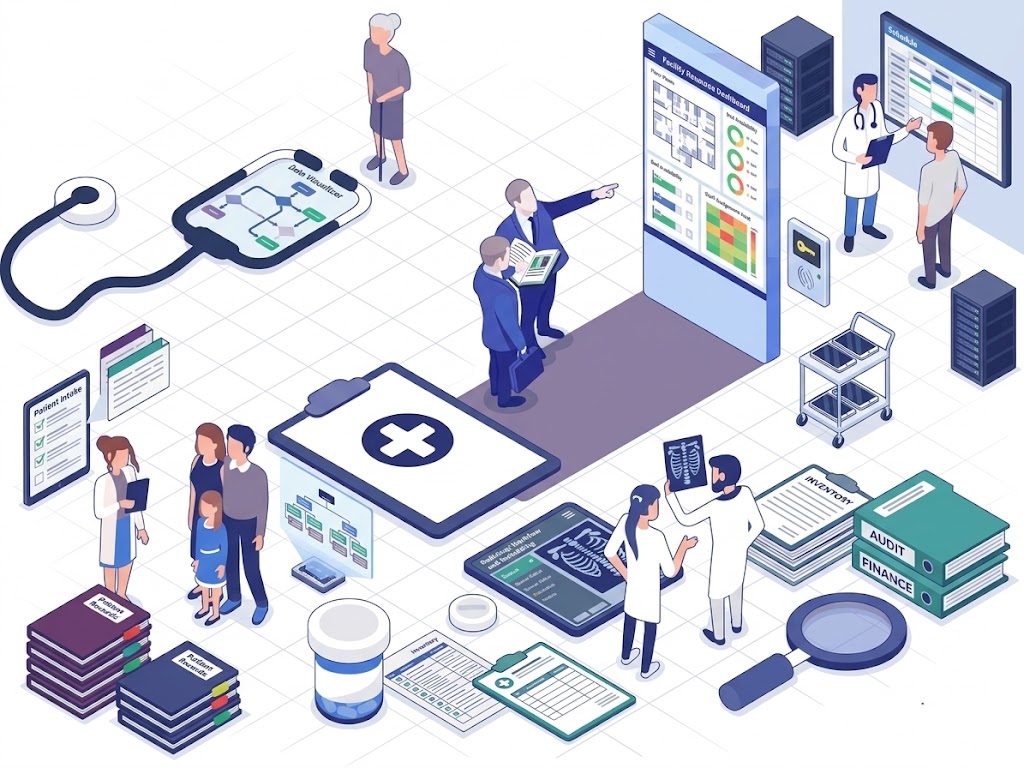
In this program, students will develop an awareness of hospital systems and how they operate, as well as how to be compliant with applicable laws and regulations governing the healthcare industry. Patients are documenting their service to hospitals in terms of how well they received service when dealing with hospitals, making effective patient service management a crucial aspect of efficient and effective operations. By understanding the principles of hospital management, students will also be able to apply these principles to enhance performance and adapt to changes in healthcare technology and healthcare standards.
Students can expect to have numerous opportunities for employment in the healthcare industry upon graduation. The skills and expertise they acquire during their time at school will enable them to develop their leadership, problem-solving, and communication skills and to create a strategic plan for the hospital where they work. The majority of students will develop a working knowledge of the latest technologies used in the healthcare industry, hospital management tools, and administrative processes across all components of a hospital, clinic, or other healthcare organization. The development of all of the above will provide students with additional opportunities for future employment in the rapidly growing healthcare industry.

Agriculture Management
The Agriculture Management course offers students the opportunity to gain knowledge and managerial abilities that will help in their careers as leaders of agribusinesses, Agribusiness organizations, and companies in the Agricultural Supply chain. The curriculum has been developed around key areas necessary for successfully managing any Agribusiness enterprise. Some of these key areas in the curriculum are agribusiness management, agricultural economics, supply chain management in agriculture, farm management, agri-marketing, rural development, agricultural finance, and sustainable agriculture practices. The curriculum combines theoretical concepts and practical experience to help students plan, manage, and improve agribusiness operations so that, ultimately, Agribusinesses are more productive and profitable.
Agriculture is becoming more important on a global level, and as more people want to implement modern forms of agriculture/agribusiness, the need for skilled professionals who manage agriculture is also on the rise. Agribusiness is currently looking for professionals who can effectively manage agricultural resources through understanding market trends and having the ability to use modern management principles in production and distribution. This program will prepare students to understand agricultural markets, rural development of businesses, food supply chains, and the use of technology within the agriculture sector. In addition, students will learn to apply management principles to increase agricultural productivity while supporting sustainable development.
Participants in the Agriculture Management program will have numerous career options when they graduate. The graduates will also develop analytical skills, leadership abilities, decision-making skills, communication skills, and strategic planning skills. In addition, they will experience hands-on learning with new agricultural technologies, agribusiness tools, and actual practices within agribusiness companies, food manufacturers, agri-marketing firms, rural development agencies, and government organizations. This preparation will give them an advantage in these expanding fields and help them find exciting positions in the growing agribusiness and agriculture industries.
Information Technology
Information Technology creates the digital foundation that runs today’s businesses and everyday life. Computer networks connect all over the world. Servers hold huge amounts of customer information, and apps manage everything from salary payments to online shopping. Cloud services like AWS and Azure help companies grow fast, while security systems stop hackers from stealing data. Coding languages build custom programs, databases keep information neat, and connection tools link different systems smoothly. IT makes sure websites open quickly, emails arrive on time, and payments happen safely around the clock. Fixing problems stops breakdowns, updates make systems faster, and automatic tools save lots of working hours.
Different IT jobs handle special tasks. Network experts establish internet connections, database administrators manage data storage, security experts prevent cyber attacks, cloud computing experts design scalable systems, and DevOps experts speed up the process of updates. Some popular programming tools are Python and Java for programming, SQL for data handling, Linux and Windows for computers, Docker for app containers, and Jenkins for testing.
At FBS Vijayawada, computer training combines theory with practical work. Students learn Python, Java, SQL to make apps, AWS/Azure to put programs online, Cisco tools for networks, and security software to watch for threats. Practical work creates online stores, safe bank applications, cloud stock systems, and small business networks.

Real results change companies completely. IT saves 30-50% running costs, runs customer help chatbots 24/7, stops huge losses from hackers, and helps businesses reach customers worldwide fast. Flipkart manages sale-day crowds, HDFC handles millions of daily payments, Swiggy follows thousands of food deliveries live, and Zomato processes crores of orders each month using strong IT systems. Information Technology powers the hidden magic behind every big digital success.