In today’s fast-changing business world, entrepreneurship has become a key driver of innovation, growth, and job creation. Because of this, MBA programs now focus more on building entrepreneurial thinking among students. Startup boot camps, in particular, play an important role in this shift.
These programs go beyond theory. Instead, they give students hands-on experience and help them understand how real businesses work. As a result, MBA students learn how to think creatively, act confidently, and make smart decisions.
What Are Startup Boot Camps?
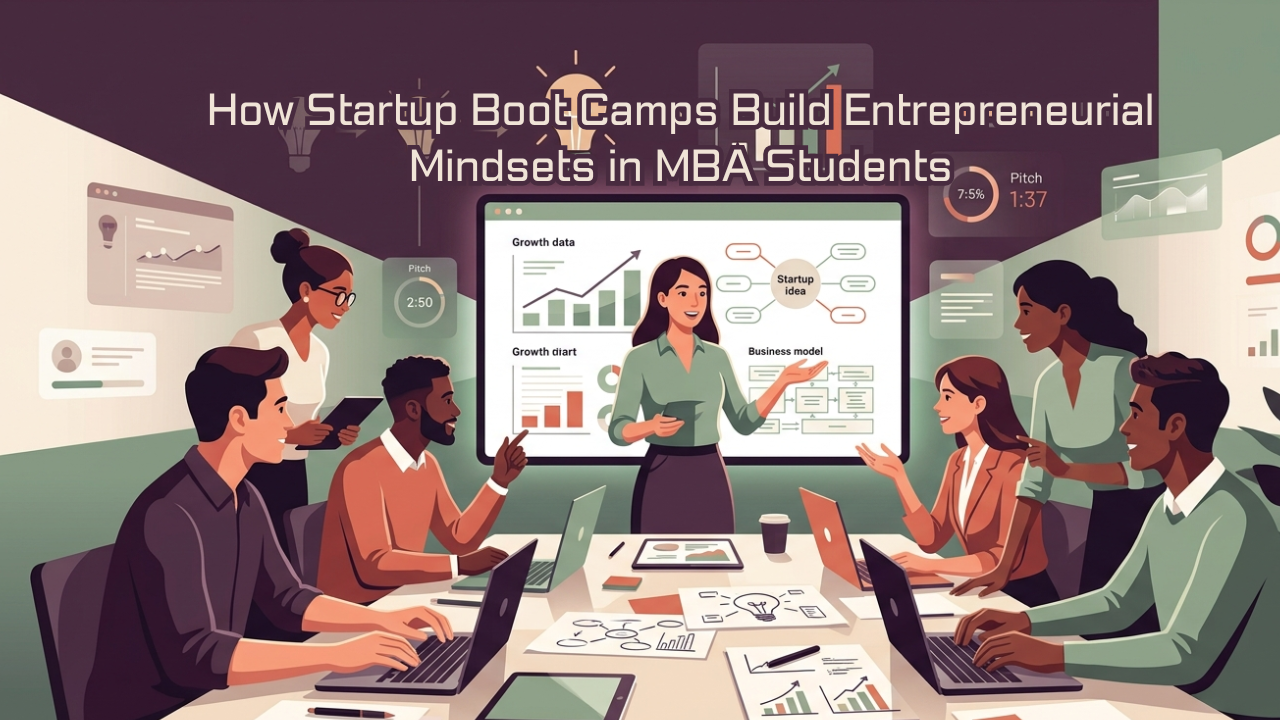
Startup boot camps are short, intensive programs that simulate the process of launching a business. Usually, they last from a few days to a few weeks. During this time, students work closely with mentors and industry experts.
In these programs, students:
- identify business opportunities
- develop creative solutions
- build business models
- pitch ideas to investors
Because of their fast-paced nature, startup boot camps push students to learn quickly. At the same time, they give a real feel of the entrepreneurial journey.
Encouraging Innovation and Creative Thinking
One major goal of startup boot camps is to build creativity. Students do not just follow traditional ideas. Instead, they learn to think differently.
For example, through brainstorming sessions and group activities, students:
- identify market gaps
- create unique ideas
- solve real-world problems
As a result, they gain confidence in their thinking. Moreover, they become more open to innovation, which is essential for startups.
Learning by Doing: Practical Experience
Startup boot camps focus on action. Instead of only studying concepts, students apply what they learn.
During the program, students:
- build prototypes or MVPs
- test ideas in real or simulated markets
- improve strategies based on feedback
Because of this hands-on approach, learning becomes more effective. In addition, students understand challenges better and learn how to solve problems quickly.
Building Risk-Taking Ability and Resilience
Entrepreneurship always involves risk. Therefore, startup boot camps expose students to uncertainty in a controlled way.
Students learn to:
- take calculated risks
- handle failure
- adapt to changes
Sometimes, ideas may not work. However, these failures teach valuable lessons. As a result, students become more resilient and confident in handling setbacks.
Strengthening Teamwork and Leadership Skills
Startup boot camps are highly collaborative. Students work in teams and often face tight deadlines.
Because of this, they:
- take leadership roles
- communicate with team members
- solve conflicts together
Over time, these experiences improve teamwork and leadership skills. Moreover, students learn how to guide teams effectively, which is important for startup success.
Gaining Mentorship and Industry Exposure
Another major benefit of startup boot camps is mentorship. Students get direct access to experienced entrepreneurs and professionals.
They receive:
- expert guidance
- feedback on ideas
- insights into real business challenges
Because of this exposure, students understand the market better. In addition, they avoid common mistakes and improve their business strategies.
Improving Confidence and Pitching Skills
Most startup boot camps end with a final pitch. Here, students present their ideas to investors or judges.
Through this process, they:
- learn to communicate clearly
- build strong storytelling skills
- gain confidence in public speaking
As a result, students become more comfortable presenting ideas. This skill is very useful in real business situations.
Enhancing Career Opportunities
Startup boot camps also improve career prospects. They add practical experience to a student’s profile.
Because of this, students:
- stand out to employers
- explore startup and consulting roles
- gain confidence to launch their own ventures
Moreover, these programs often become the starting point for real business ideas.
The Future of MBA Education
Today, MBA education is changing. Business schools are focusing more on practical learning.
As a result, many institutions now include:
- innovation labs
- startup incubators
- entrepreneurship programs
This shift shows that learning by doing is becoming more important. Therefore, startup boot camps are now a key part of MBA education.
Conclusion
Startup boot camps are transforming how MBA students learn entrepreneurship. They combine practical learning, teamwork, mentorship, and real challenges.
Because of this, students develop the skills and mindset needed for success. In the end, startup boot camps do more than teach business—they help students turn ideas into reality and build successful ventures.