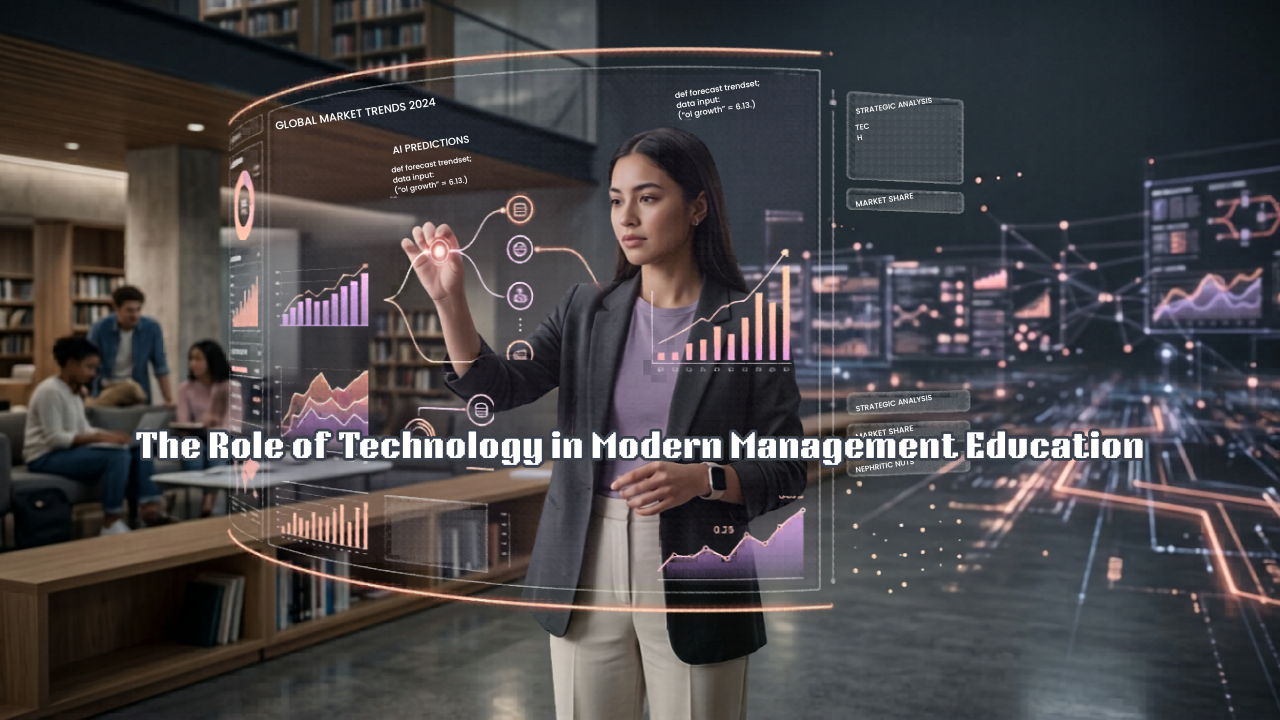
Technology is very important for people who want to learn about business today. Companies rely on computers, data, and digital tools to make decisions and carry out operations. Because of this, business schools are using technology in their teaching methods to prepare students for managerial roles in the real world. Business schools teach students how to use technology effectively so they can perform well in organizations. Today, technology has become an essential part of management education.
Technology in management education does much more than simply make learning easier. It actively enhances the learning experience. It also helps students understand concepts better. At the same time, technology builds practical knowledge students can put into practice situations they encounter day to day. Management education now uses technology to help students gain the skills they need in order to make it. Enhancing Learning Through e-Learning Platforms LMSs are now universally used at business schools. Together with teaching methods in class and materials which can be accessed online whenever needed, these greatly facilitate both teaching and learning.
Learning Management Systems allow students to access study materials easily. Students can submit assignments, participate in discussions, and receive feedback from faculty through these platforms, which is very helpful. Business schools find LMS platforms effective in supporting both teaching and learning.
Technology also allows students to learn at their own pace and at any time. This enables students to review concepts even when they are not in the classroom. Technology encourages independent learning and helps students understand topics in their own way. Students can continue learning about subjects that interest them making education more flexible and engaging.
Case-Based and Simulation Learning
Modern management education relies heavily on technology through case studies and computer-based business simulations. In business simulations students find themselves embroiled in real business situations. Students engage in activities such as competing with other companies, making financial decisions, and handling operational challenges. Business simulations have a high status in management education. These media are important to students in that they give them a chance to put academic learning into practice. Students can see the results of their decisions and study their impact. This kind of learning takes place under controlled, safe conditions where mistakes repair themselves becomes learning experiences. These tools help students understand how managerial decisions affect organizations.
Data-Driven Decision Making
Data plays a crucial role in today’s business world. Management students learn to use analytical tools and dashboards that present important information. They also learn how to interpret data effectively. Technology helps students understand how data supports both strategic planning and daily business decisions.
This experience develops students’ analytical thinking and prepares them for organizations that rely on data-driven decision-making. Students gain practical skills in working with data, which is essential in modern organizations. Exposure to data analytics helps students understand how data functions in real business environments making it very valuable for those aiming to work in data-driven companies.
Improving Collaboration and Communication
Technology plays an important role in collaborative work. We have things like video conferencing, shared documents, and project management platforms that make it easy. Students use these tools all the time for group work and presentations. Such technology helps students learn how to work as a team and how to communicate with each other. This is important because teamwork and communication skills are skills that are essential in professional life. Technology supports collaboration. That is a good thing for students.
These learning experiences are a lot like what people do at work. When people work together on a team. They may be in different locations but still work together effectively. This is what students will be doing when they use these tools. This prepares students for working with colleagues in professional organizations. These learning experiences help students understand teamwork as it functions in real workplace settings
Bridging the Gap Between Academia and Industry
Business schools are using technology to help students meet people who work in the business world. They do this by having webinars and virtual guest lectures. Through these interactions, students can communicate with business professionals and learn about current industry trends. Business schools are doing this so students can understand what business professionals are looking for and what is currently happening in the business world.
Technology ensures that what students learn in classrooms aligns with real-world industry requirements. By connecting academic learning with practical business needs, technology helps reduce the gap between education and industry.
Preparing Tech-Savvy Management Professionals
When management education includes technology, the students who graduate are comfortable with using digital tools. They are also able to adapt to new technologies. This improves their employability. Management education that uses technology really helps students get ready for their careers.
Students gain confidence in decision-making, communication and leadership when they use technology. Technology helps students perform managerial tasks effectively. This makes students feel more confident in their abilities and the skills they learn like decision-making, communication, and leadership.
Technology has transformed the way management education is delivered. It makes learning more engaging and provides opportunities for practical application. Management education has become more aligned with real-world business practices. This approach with technology helps students become professionals.
Business schools that effectively integrate technology go beyond teaching theories. They help students develop essential managerial skills. Technology in management education ensures that students acquire skills that organizations seek. Together, management education and technology prepare students for the modern workplace.
By embracing technological advancements, management education continues to evolve, producing professionals who are adaptable, knowledgeable, and ready to succeed in a digital-first business world.